
#39
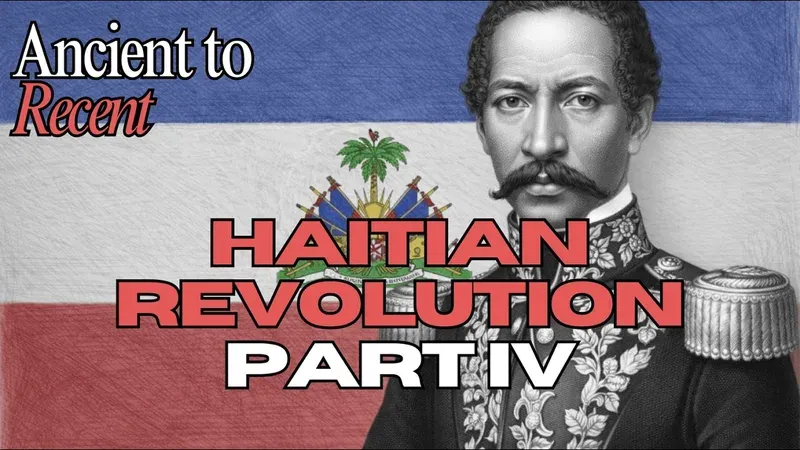
The Haitian Revolution — Part 4
2 March 2026 · 38 min · Season 1
 Watch on YouTube →
0:0038:18
Also on
Rate the show
Ratings are how new listeners find the show. It takes a minute and it makes a real difference.
In this episode of Ancient to Recent, Toussaint Louverture crushes rivals and claims unchallenged power in Saint-Domingue, but at the cost of deepening divisions and inviting imperial backlash.
From 1797–1800, he expels the British, defies French agents, and wins a savage civil war against André Rigaud in the War of the South. Ex-slaves return to plantations under rigid labor rules, white planters regain footholds, and trade booms with Britain and the US beyond Paris's grasp.
In France, planters attack emancipation while allies like Laveaux defend it. Toussaint asserts liberty's non-negotiable price, forging secret pacts and a loyal army.
Yet racial tensions erupt, atrocities scar both sides, and cultivators chafe under the new order.
As Toussaint dominates the island and drafts a constitution to secure his rule, Napoleon's jealous gaze from France signals gathering danger.
Join Joseph Parkinson as Ancient to Recent continues its series on the only successful slave revolution in history.
🎧 New episodes every Saturday
📲 Follow on YouTube, Spotify & Instagram @AncientToRecent
#HaitianRevolution #Haiti #ToussaintLouverture #AndréRigaud #FrenchRevolution #Abolition #ColonialHistory #HistoryPodcast
Read transcript
This transcript is automatically generated, so it may contain typos and misheard names.
I am a soldier, not a politician, but I know this liberty is not a gift that can be taken back. Toussaint non Vechore, Welcome to ancient to recent. My name is Joseph Parkinson and today we continue the incredible story of Toussaint, Long Vechore and the Haitian Revolution. Episodes of Ancient to Recent Art every Saturday that are available on YouTube, Spotify and Apple Podcasts. Toussaint Lamba Chore had risen from slavery to become one of the most fearsome commanders of his age.
A man who once did not possess even full control of himself, nor liberty to direct his own affairs, now found himself commanding armies, building a state, and carrying forth revolution. He pitted his wits against some of the greatest empires of the day, and through cunning and bravery was victorious again and again. In so doing he let his people to freedom. But all was not one for Lommachur. Liberty had already commanded a great price, but she was not purchased yet. As the final chapter of the great slave rebellion played out, Lommachur found himself asking who is friend and who is foe?
Lommachur had been swept up by the great Tempest of events that had carried Thrones and dominions away. He was at the vanguard of the storm and the Revolution that burst from Paris with the fall of the Bastille. He marched triumphantly in the armies of the French Revolution, bringing the Revolution's principles to the lowliest soul on the most damned plantation of the slave colony of San Demand. But as he did so, across the oceans, many thousands of miles away, in the very heart of the Revolution itself, those same ideals were being questioned. The revolution Long Vichur had waged, and indeed even his very humanity was being challenged.
Long Vichur, who received regular correspondence from Paris, could hear the growing chorus of doubts. And at the very front of those casting aspersions were the planters, those who had been driven from their land by those that they had so long exploited. As the chorus grew, in late 1797, Long Vichur wrote a letter to the Directory, The body that governed revolutionary France, Lumberchuh, left them in no doubt. The free black people of Saint Demang had emancipated themselves through force of arms. They had persevered in the face of unimaginable odds, endured untold hardship, and would guard their liberties jealously. Those who sought to turn the clock back to the days when men were no longer brothers in the Revolution, but rather master and slave.
Those who commanded and those forced to obey, betting on a lost cause. Those days were finished. The lumber chew was not done yet. Just in case anyone in Paris had any lingering doubts, a further letter hammered the point home. A people once bound in slavery, now free, have taken to the field, routed the mightiest armies of the old world, and now stand defiant, liberated by their own hands. They have tasted the sweet fruit of liberty, and will never consent to drink the bitter broth of slavery. Not if all of the kings of Europe, not if all of the armies of the greatest empires of the world should land on the shores of Sanderman, would they submit to slavery once more. They would sooner see their nation consumed by fire and brimstone than live one day as slaves ever again. This was a solemn warning from a loyal soldier in the cradle of the Revolution.
Many former planters, men who spoke of liberty but whose fortunes were gained from the broken bodies of Africans, used the freedoms they so cherished to deny the humanity of others. One such planter was Vignette Duvall Blanc. He took his seat in the Council of 500, and at every opportunity he denounced the revolution in Saint Demanding in general and Toussaint in person. Liberty, he cried, is a responsibility, not a right. It is like fire to be conferred on those aware of its destructive powers.
It is entrusted to the responsible, the educated and the wise, not to barely human former slaves who know nothing of the grand ideas of great civilization. Look what these Africans have done with a once prosperous colony. Commerce has come to an end. Fields are untilled. Crops rob at the side of the streets. Where there was one's order, there is anarchy. Where there was one's prosperity, poverty reigns. And all of this due to the despot, the tyrant, the bloodthirsty Toussaint L'enfuchur, the so-called men who would now administer was the Pearl of the Caribbean and the jewel of the crown of France's great empire are no man at all. They are uneducated, uncultured Barbarians who have shown by their indolence their inability to govern. And what is to be done in the face of such squalor, such terror, such anarchy?
I tell you it is only fair, only just, only right. It is our responsibility and our duty to bring order and restore the rights of property. Send for the troops, set them on their ships, dispatch them to Sandoman, and win back for France what is hers. By right, by conquest, by duty and the ex slaves. Their liberty is forfeit. They have been found wanting, as all knew they would be. Send them to the fields, where they may once more be made useful. As he spoke, other delegates became ever more enthusiastic. With each rhetorical thrust, he seemed to draw blood from the body of Liberty herself.
The delegates cried in enthusiastic evangelical acclamation. Send the soldiers, bring back the planters, restore property to it's owners, and down with Long Vechur the tyrant. The Long Vechur the separated by thousands of miles, was no passive bystander to these arguments, he replied in print. And Long Vechur could draw blood himself. The slaves are in. Educated, you say? What chances have they had to learn? What provisions were made for their enlightenment by their masters?
The people of Sandabang were kept in bondage for generations. How can a man learn to read and write when he's committed to the field for 16 hours a day, When he leaves his cabin before sunup and returns after dark, when his body aches from harsh labor and the harshest still blows at the overseer and the driver? Is this how you were educated? Is this how the planters brought their children to learning? If the slave is ignorant, it is your doing. The slave may be many things, but he is a man, as much a man as any, white and deserving of dignity, deserving of opportunity, and possessing an innate understanding of right from wrong.
Or are only the so-called civilized allowed to know good from evil? Longiture did not shy away from the horrors of war. Had blood been shed? Yes, but was the violence of Saint Demagne that different from the violence of France? How had the gentleman at the Directory brought about their revolution? Was it kind words and high ideals that had removed the head of King Louis the 16th? Or was it the handiwork of Monsieur Guillotine Lomacheur dismantled the arguments of the planters and turned them on those that had deployed them.
You say the blacks of Saint Demagne were violent because they are ignorant. What does that say of the gentleman of Paris? With all their refinement? What is their excuse for brutality? You say the violence of Saint-Domingue justifies the return of the lash and the chain. Maybe the violence of the revolution should restore the crown and the scepter. Then when will any of the planters now resident in Paris look inside themselves and see the horrors they've inflicted and the prophets they derived from so much wrong?
Toussaint made an impassioned plea for a colour blind world, A world where is not the colour of 1's skin, but the content of his character that made-up a man's worth. In the world Toussaint was building in San Damang, all would be equal and all would be treated as such by the law. The same rights, the same responsibilities, the same laws. Toussaint, ever the pragmatist, extended this offer to the former planters. There could yet be a place for them in San Damang if they would just give up on the old world and accept the new order. They could find themselves a new life, just as rich in profit, but built on honest toil rather than brutal subjugation. The blacks of Sandomang were ready to build a new world with their former planters, if they would just take up the offer. Lundvichur had a warning, not just for the planters, but for France herself.
France and the slaves of Sandomang had fought side by side. Together they had turned back. The Spanish, contained the British and defeated the royalists. But such talk of undoing emancipation could do in Sandomang what no army could. Fear of the return of the lash could turn loyal free blacks into rebels, and could wrench Saint-Domingue out of the arms of the mother country. And just in case there was some, as there so clearly were, who could not come to terms with the new reality, just know this. Any army, French or otherwise, that came intent on restoring slavery would find to themselves only a grief. Long Vitchell had one final question and appeal to reason. He put this question to all the former slave owners. What would they do if they were the people of Saint-Domingue? If they were by near accident of birth, born black and enslaved rather than white and free?
Would they accept slavery? Would they endure the hunger, poverty and deprivation, the humiliation? Would they allow themselves, once free, to be enslaved again? Toussaint was not alone in making this argument. Julian Raymond, an indigo planter of mixed race born to a black mother and white father, spoke in defence of the former slaves and pointed out, much as to son Hat, that talk of restoring slavery would bring about the very vision of anarchy the white planters feared and some might say exaggerated.
Raymond, a planter himself who had owned hundreds of slaves and was one of the wealthiest mixed race persons on the colony, was eager to see the colony restored to economic health. Raymond believed the former planters could play a part in the rebirth of Saint Daman. But slavery must be a thing of the past. Raymond insisted that returning planters must put slavery behind them, even swearing an oath. And they're the speak of a restoration of slavery on pain of deportation. In Paris, Etienne Le Vu, former governor of Saint Daman, who returned to France to fight the cause of Black liberation, watched as tensions rose and the reckless demands of the former planters stirred the Potter Revolution. Le Vous spoke passionately in defence of Saint Daman. The government of France stood for the liberty of all men, regardless of colour.
Calls for the restoration of slavery were not just reckless, but contrary to the very principles of the Revolution. And who should choose to use their liberty to call for the slavery of others should be immediately expelled from the colony. As tensions rose and rhetorical barbs exchanged a sudden turn of events. Royalists had won the majority in the core legislative in the elections of early 1797. Fearing a restoration of the monarchy, members of the directorate, along with elements of the armed forces and all the election results, ejected monarchist members and changed the composition of the Council of 500, significantly reducing the power of the planters.
Levoux, previously barred from taking his place in the Council, now was able to attend. Along with many more radical delegates, Levou set about introducing legislation to defend emancipation. Levou was finally able to address the Council of 500. He dismissed the falsehoods spread by the planters, now out of power and out of options, many physically deported. Levoux acknowledged that indeed it was true. Toussaint had fought in the ranks of the Spanish army against France.
But he was a soldier for one cause, the cause of liberty, and this cause was the cause of the French Revolution. As soon as this was known to Lonvechure, he had come home to the Balor of the Tricolor. Had Lonvechure not proven himself with his many acts of bravery and all in the service to the Revolution? Had Lonvechure not faced the enemies of the Revolution and vanquished them time and time again? Had Lonvechure not shown himself as a reasonable, honourable and decent man, more decent than could be expected, even showing forgiveness and mercy to his former oppressors, To his enemies, he showed mercy, to traitors he offered forgiveness. And to France, Lumberchor had only loyalty and gratitude. Lumberchor had brought order, revived the plantation systems, and despite all of this, there were still those who called for his enslavement, all on account of no more than the colour of his skin.
What's more, if France was to have any hope of retaining her prized Caribbean possession, then showing that France could be a protector and benefactor, not abuse an oppressor, was much more likely to win loyalty. Some planters, though still allowed in the council, try to argue back. Is an African born in a different continent, a Frenchman? They are French neither by birth nor by breeding, and as such have no claim to the rights of French citizenship. Le Veau rejected such arguments as absurd. The slaves may not be French by accent of birth, but they have earned it through hard toil, which is more that can be said for any of the planters.
They have done more to contribute to the wealth of the nation through the strength of their muscles and sweat of their brows than the fine gentleman on their plantations. What's more, slaves would be the defenders of the Revolution. They would fight to defend revolutionary ideals and guard France's place in the Americas. Laboux's intellectual and rhetorical skills carried the day, passing new legislation into law that guaranteed emancipation in 1798.
Further laws will pass to protect ex slaves. From now on, the air of France, too pure, too perfect to be sullied by slavery once breathed in, would emancipate a slave. As soon as an enslaved person set foot on French soil, they were henceforth and forever free. Rights were extended yet again to protect the formerly enslaved. Black veterans of the Revolutionary Army were given tax relief and many thousands of slaves were granted the right to vote.
It truly seemed like a springtime of the people, and many in France looked forward in supreme confidence to the restoration of the colony under the leadership of the Loyal Soldier of the Revolution. Toussaint on the chore. Revolutionaries are by their very nature dreamers. They are optimists who hope that the highest ideals can suspend the laws of nature and lift the souls of men. But reality is made of sooner stuff than mere ideals.
Peace was yet still far away on Saint-Domingue. It was sibling rivalry, not universal brotherhood that was simmering. And still Francis greatest foe, the British had not given up their designs on Saint-Domingue. Britain still smarting from the lawsuits. American colonies look to build a new empire in the Caribbean. She already possessed many islands such as Jamaica, and she knew the riches that came from sugar and coffee. Rebellion on Sanderman presented a golden opportunity to the British, perhaps a chance to get one back on the French for the role they played in the American Revolution, and a chance to prize away one of the wealthiest colonies in the world.
The British were already engaged on Sanderman and they sought to take the fight Toussaint and his army of slaves. In 1797, the British pushed a Toussaint out of Mirabales, but Toussaint struck back at San Marcos only to be met with disaster. The ladders brought to scale the walls were too short and Toussaint soldiers were forced to clamber over each other's backs, only to be shot down by redcoats and see their comrades bodies fill the trenches below. The war dragged on with the British looking to recruit many disillusioned slaves to their ranks, thousands joined up by 1798.
Inspired by the promises of freedom and land under the shade of the human Jack, these former slaves employed the tried and tested tactics of ambush and surprise against the forces of Louverture. But for all of Louverture's military genius, it was the familiar invisible foe of disease that took a terrible toll in the British ranks. By 1798, the British high command was starting to think again about the merits of the operation, and new commander, General Thomas Maitland, was appointed.
Taking command in March of 1798, he quickly assessed the situation and judged it hoopless. Toussaint's forces were turning the screw, hitting the British and driving them back. Many black troops were now deserting the British ranks, tired of constant war and enticed by the prospects of immediate emancipation with Toussaint. Whilst laying the law down to the directory and battling a still vicious war with the as yet undefeated British Lombard, Shaw's life was made yet more complicated by the coming of a new guest, Gabrielle Marie Theodore Joseph Ordeville, a French army officer, arrived in Saint Damang with orders to take command at the colony.
Ordeville had been appointed before the coup of 1797 by a still plan to dominate a council of 500. He was fired by revolutionary zeal and had just come from playing a crucial role in the brutal crushing of Catholic and monarchist opposition to the revolution in the Vondai. Perhaps his determination was the zeal of the converted, as he was of noble birth himself and thus eager to distance himself from the Onseon regime in order to keep his head.
Ordeville and Toussaint had a difficult relationship from the start, with Toussaint suspicious of the Frenchman. But for all of Ottoville's intentions, he had brought no fresh troops with him and thus lacked an independent power base. Even so, he had come to command, and he viewed Toussaint as his subordinates. The British knew that Toussaint was the real power on the island and negotiated directly with him. Toussaint, ever the pragmatist, gave the British generous terms for their withdrawal, eager to win goodwill in London, aware that today's enemy may well be tomorrow's valued ally, Toussaint and Maitland negotiated the terms of the British withdrawal with French planters allowed to keep their property in guaranteed safety.
Ordeville, after consulting the Toussaint, agreed to the terms. Toussaint further extended amnesty to defectors and those who had fought in the British ranks. With victory secured, two sons Army marched in triumph into Port-au-Prince. The British had been the last hope for the committed defenders of slavery. Now, with all hope of restoration gone, many planters refused Lumvature's offer to stay at Flat. Others hope to blend into the local white population, discarding their royalist medals and passing themselves offers. Good Republicans hoping to bide their time when events would turn in their favour.
And this troublesome ex slave Toussaint number Chor was no more. But Toussaint faced the same old dilemma he had faced in other parts of the colony. He wanted to be the bringer of liberty. However, economic reality required that the fields must be worked, exports must be kept up, the public coffers must be filled. There was no shortage of labour to do the job. The years of slavery meant that the newly liberated had many things on their minds. Returning to the fields was not one of them. Toussaint knew it was one thing to win the war, another to win the peace, and without restoring the economy, all his victories would count for little.
He made the painful decision to force the nearly free people back to the plantations. Toussaint had proved himself to Odderville, but their first meeting was filled with tension. Odderville talked great game when it came to revolutionary fervour, but he was sadly still a man of his time and so were many of the French officers around him. Audeville could admire Toussaint's bravery, his dedication, his courage, but he could not ignore the colour of his skin.
With the British pulling back, tensions continued to simmer with Audeville before departing Maitland through a lavish banquet for the victorious Toussaint. With fine foods and wine. The two talked and Maitland praised Toussaint as a great general. At the end of the dinner, Maitland awarded the fine silver to Toussaint. As one final show of gratitude from His Majesty George the Third to a former slave, this was a pleasant interlude and a rare moment of respect from European officials to Toussaint. St. der Man was officially still a French colony, but the reality was that it was Toussaint who was the uncrowned king. Toussaint's relationship with Audeville continued to deteriorate.
Toussaint for Audeville. Haughty, racist, and lacking a real understanding of the affairs of the island. Audeville considered Toussaint insubordinate and ungrateful. Toussaint was also hurt by Paris appointing Audeville the choice of the planters to oversee him. Had Toussaint not been a loyal soldier for France. And yet, what respect did it win him? French officials were quick to talk of loyalty and solidarity, but though quick to demand, it was slow to show it in return. The time may come where the relationship with distant France may no longer serve any purpose, and it may be France herself that Toussaint would have to defend the liberties of Saint de Man against.
With the British gone and the island secured, there was little time to celebrate. Attention must turn to the business of governing, and top of the list was rebooting the plantation economy. Oderville set about issuing a raft of orders regulating labour relations and returning property to form masters, each time tightening restrictions on ex slaves, each alienating the newly emancipated. Odeville's attitude was born of racial prejudice.
Revolutionary principles were fine, but blacks, as far as Odeville were concerned, were still black. They were lazy and unruly, and had to be commanded for their own good. They could never hope to govern themselves when former slaves resisted. This was yet more evidence, to Auderville at least, of how workshy they were, and thus in need of the firm hand of the white man. Auderville introduced a new system of enforced labour contracts for former slaves with fixed terms yet again. They seem to be all too like the reintroduction of slavery by covert means.
Toussaint had himself taken firm action when needed, but he was more sensitive to the views of the former slaves. Toussaint had been willing to allow former slaves to change plantations and not wanted locked in terms of labour order. Bill dismissed such concerns as the whining of work, shy blacks, the decrees and the expected effects, desertions, work stoppages, grumbles of discontent. If this was freedom, why had we fought so hard, sacrifice so much for it? What was the point of all that blood for a life so similar to the one many slaves had died To break free from? The anxiety of soldiers, many experienced veterans who had risen to become officers and even commanded white soldiers was especially acute.
They had not only broken free from bondage, they now held lofty positions. They commanded men in battle and were looked up to. They were not going to bend and stoop under the driver's gaze. The old attitudes of white officers and society persisted. Racist jokes were exchanged, including some French officers commenting that Toussaint was nothing but a monkey with a handkerchief and chortling of black officers, many of them victorious commanders wearing earrings or covering their fingers in gold rings.
It should have been noted that the very men these white officers and gentlemen were mocking were battled hard and veterans of many battles against some of the finest armies Europe could put in the field. Maybe one of these days they wouldn't be laughing so much when it came to their turn. Tensions boiled over in October 1798 when a rebellion by a group of black soldiers was handled badly by Odeville. Toussaint decided Audeville had outstayed his welcome and it was time for him to leave, expelling Audeville, who sailed for France the same month. But Audeville did not depart alone. Many French officers left with him. These French officers were shocked by Toussaint's willingness to deal with former planters, his lenience towards defeated royalists, and his dealings with the British. The French were sure to return, and Toussaint needed to be ready. Toussaint knew Saint-Domingue was a small fish in a big pond with some hungry whales, and if she was to avoid being swallowed, Saint-Domingue would need new allies.
Toussaint turned to the British. Behind the scenes dialogue had already begun between Toussaint and Thomas Maitland. As part of the withdrawal agreement, Toussaint had agreed not to stir trouble in British Jamaica in return for lifting of the blockade on Saint-Domingue's ports. Step by step Toussaint was building estate and an economy, and now the building blocks of an independent nation. Opportunity for loosening the French grip was further presented in 1798.
France and the US had been allies during the American Revolution, with French troops and supplies playing a crucial role in the British defeat. But the 13 colonies relationship had been with royalist France, not it's revolutionary successor. Many of the United States looked with cold indifference to the overthrow and then execution of their ally Louis the 16th. Relations worsened when French naval vessels began seizing American ships on the high seas after the US stopped repayments on loans owed to France, arguing the money was owed to the onsenal regime, not the French Republic. Relations between the former allies worsened when, in 1794, the US and Britain signed the Jay Treaty, opening trade between the two countries.
The United States had drastically reduced its military expenditure at the end of the Revolution and found itself in the somewhat embarrassing position of asking Britain to supply the naval muscle to fend off French aggression whilst the US rapidly rearmed. One of the consequences of the so-called Quasi War was the collapse of trade between Saint Damang and the US, one of its largest export markets due to Saint Damang being a French colony.
But Toussaint appealed to President John Adams, saying that Sandamang was not involved in the conflict and that French rule had all but ended on the island. The cause of trade between the US and St. Damang was championed by Timothy Pickering, the US Secretary of State. Adams was hostile to slavery and both the US and Britain urged Toussaint to declare outright independence. But Toussaint, still wary of cutting formal ties with France, refused.
Negotiations with the US continued and in 1799 Congress allowed for trade to resume between the two nations in return for Saint Man closing it's ports to the French warships that have been harassing American merchants in the Caribbean. With trade renewed and tensions with France growing, both commerce and convenience proved A lubricant for improving relations with the UK and US. British and American merchants bought up sugar and coffee.
Capital flowed in, filling the coppers of Saint de Man, but merchants also brought wares with them. With cash at hand, Toussaint bought up weapons, ammunition and powder, preparing for what seemed like the coming conflict with France. Saint de Mang had a complicated relationship with both the UK and US, but especially with the latter. The American Revolution only a few years before had spoken the language of liberty and freedom, and some American presidents, like Adams himself, were committed opponents of slavery. But the US was a new nation and there were many unresolved questions, slavery being the most pressing. Slavery would be a serpent that would bite at the heels of Uncle Sam till the issue was finally settled some 60 years later in the American Civil War.
But in it's infancy, the United States was a somewhat awkward union of enlightened principles and antiquated practices, high ideals and chattel slavery. Many American presidents had to contend with a powerful slave owning states in the South who did not look kindly on the example Santa Mang set to their own black populations. Northern merchants on the other hands, saw only dollar signs, an incredibly wealthy new market rich with sugar and coffee and white on their doorsteps.
They could make a quick fortune if they could just open the trade ports. Toussaint continue to play all sides against each other. In 1799, the directory was planning on giving the British a taste through medicine by inciting a slave revolt in Jamaica. Toussaint learned of the plan, tipped the British off, and sent the French agents to the gallows. Toussaint want friends in London and enemies in Paris. Collision was rapidly approaching with Paris, and Toussaint needed new allies, and fast.
In 1798, the secret agreement Toussaint had made with the British leaked and was splashed across London newspapers. Many interpreted this as a Declaration of Independence, but Toussaint continued to profess his loyalty to friends. Toussaint never actually went all the way and called for outright independence. He knew that Sandeman was too small and too rich to survive for long. What he sought was freedom, not independence.
If he could have autonomy and use it to protect emancipation within the warm embrace of the French Republic, then so be it. If not, then Britain or the United States would do. He was a pragmatist, a realist, a practitioner of realpolitique, and did not care to which constitutional crown he had to profess loyalty to as long as he got his way. Gradually, the economy was reviving. Toussaul continued to welcome back the former plantation owners on the condition that they not cause trouble and put themselves to useful labour, reviving the economy.
But tensions simmered between the defenders of the old world and the inheritors of the new. Many planters believed that they would come home, walk back onto their old estates and it would be business as usual. They assumed any changes would be cosmetic. 3 Cheers for liberty and the Revolution. Now back to the fields for the blacks. They were to receive a rude awakening. The houses were not abandoned. They had been taken over.
Their estates had not fallen into disrepute but commandeered. Their plantations had not fallen fallow but carved up by ex slaves who were just as keen on their property rights as any white masters. Toussaint had taken on the trappings of being the leader of Saint de Man, but his position at the top was not uncontested. Andre Regard, a mixed race man from a wealthy family, born to a French father and an African mother, had long fought in the ranks of the Revolutionary Army.
He'd been educated in Bordeaux but upon returning to Saint Demag had answered the call of the Revolution. Regard had been fighting the British, Spanish and Royalists for many years and championed the right of free blacks. He had won many victories and carved out his own power base in the South of the colony. When Audeville had arrived in 1798, Audeville had tried to play Regard in Toussaint off against each other, treating Regard with warmth and kindness whilst keeping his distance from Toussaint.
Regard was wary of the Frenchman, and there were rumours that Toussaint and Regard had entered into a pact or secret agreement not to allow Audeville to play them off against each other. But with Audeville now gone, the United front was no longer needed. Both men were charismatic figures, both accomplished military leaders, neither known for submitting to the demands of others. Before departing, Audeville had served on final seed discontent. He had written a private letter to Regard accusing Toussaint of betraying the Revolution and selling the island and it's people to the British and Americans. Auderville absolved Regard of any loyalty to Toussaint and encouraged him to take command for himself. Toussaint in regard may have been allies who fought on the same side, but within only months tension turn into open conflict. Both hurled accusations of the other. Toussaint claimed Regard had attempted to assassinate him. Regard claimed Toussin was conspiring secretly with the British to restore slavery.
Both used race as a weapon wielded as a cultural against the other. Toussin claimed Regard refused to serve him because he looked down on Africans. Regard claimed this was a slanderous lie, that he had a black mother and black officers in his ranks who he valued dearly. The island was demarcated into the North, run by Toussin, and the South, dominated by Regard. Tension along the border soon flared into clashes with regard at the numerical disadvantage. He decided to strike first, sending 4000 men crashing into Toussaint's territory over running towns and sending Toussaint's troops Wheeling in disarray in the north. Some ex slaves, tired of Toussaint's insistence they returned to the plantations, rose in opposition. Toussaint faced betrayal in the rear and adversity at the front. The threat even reached into his inner circle. With not one but 2 assassination attempts, 1 riddling his coach with bullets, another claiming the life of his physician, Toussin dialed up the racial rhetoric. He reminded his followers what the free blacks had done to the Swiss, the slaves who had fought by their side only to be betrayed.
Regard dismissed the accusations, brandishing Ordoville's letter and claiming Toussin was a traitor, betraying the ideals of the Revolution to his supposed British backers. The fighting raged back and forth, with neither able to deliver the knockout blow. Toussaint sought to achieve through diplomacy, the end that eluded him on the battlefield. He had nurtured good relations with the British and Americans. Now he sought to cash in his trump card.
Toussaint sent emissaries to negotiate with the great powers, claiming that Regard was nothing but a pirate and that victory for Regard would undermine the commercial relationships between Saint Man, the UK and US. Toussaint asked the US to lend naval support to cut the South off from overseas trade and with it resupply with British and American ships. Cutting Regard supply routes. Toussaint was able to set about crushing the rebellion behind his ranks. 1 by 1.
He stamped the flames of sedition into dust. The fighting took on a new level of cruelty. Hangings, shootings, mass executions, death dealt out on a moment, suspicion. Toussaint protested publicly but took few steps to stop the killings, always placing himself one step away from the dirtiest deeds. As the flames of sedition were drowned in blood and the noose tightened around regard in the South, Toussaint was able to unleash his full force on his southern foe.
The war in the South was all the more bitter for being a sibling rivalry, a war between old friends and former allies. It was the messiest of breakups. No mercy, no quarter, only rage, vengeance, revenge. No prisoners were taken. Those that fell into their opponents hands could expect only the bullet or the noose. A trustee was paid back with the trustee an eye for an eye, tooth for a tooth. As regard fell back under the weight of two sons Onslaught.
He declared nothing was to be left for the victors. If he could not rule sand a man, he would leave behind a desert. Plantations were burned, feels set to the torch. Prisoners executed, estates turned to rubble. Regard's allies began to desert him. They could see who was winning the war with their own eyes. Toussong sought to encourage Regard's followers to defect. He announced an amnesty for those who switched sides.
A trickle turned into a flood. In June 1800, a French emissary arrived carrying proclamations from the new First Consul of the French Republic, a little known Corsican officer of minor aristocratic birth by the name of Napoleon Bonaparte. One proclamation confirmed Toussaint as the General in Chief of the Army of Saint Daman. This was a devastating blow to Regard and undercut Regards claim to legitimacy. Sensing the tide was turning decisively, Toussaint offered a general amnesty to anyone who would surrender. Regard's forces collapsed and he boarded a ship with his family before sailing for France.
He would not get far, running straight into the US naval blockade. He would be arrested and detained on the island of Saint Kitts before being released and eventually making his way to France. After capturing the South, Toussaint issued a declaration of amnesty. And yet, bloody by the ferocity of the fighting, reprisals still followed. With the South subdued and Sand Man occupied, Toussaint controlled the entire island of Hispaniola.
The next task was to secure his rule, and by this he would need that most. 18th century of inventions, a constitution. Toussaint was now the undisputed master of Sand Man, but jealous eyes from across the Atlantic watched developments with growing fury and cared little for the liberties and freedoms its people had purchased at such great cost. Sanderman was not yet free. Thank you for listening to Ancient Recent. My name is Joseph Parkinson and next week we will continue the story of Sanderman, Toussaint, LA Mature, and the Haitian Revolution.
Episodes of Ancient Recent are out every Saturday and are available on YouTube, Spotify and have podcasts. The.