
#38
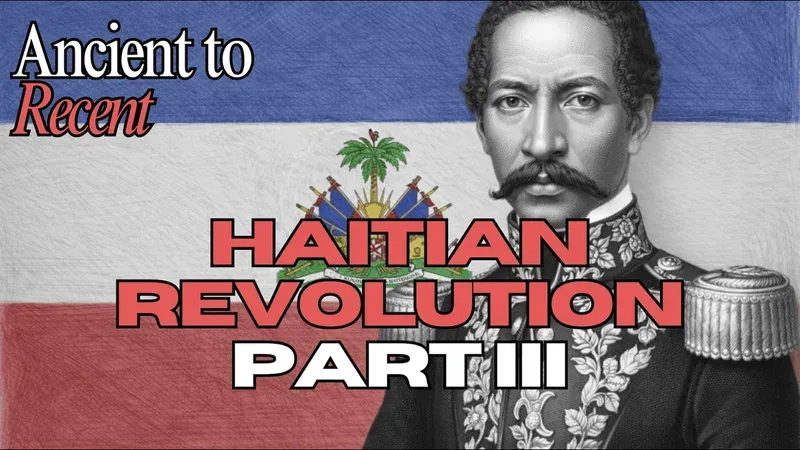
The Haitian Revolution — Part 3
21 February 2026 · 42 min · Season 1
 Watch on YouTube →
0:0042:01
Also on
Rate the show
Ratings are how new listeners find the show. It takes a minute and it makes a real difference.
In this episode of Ancient to Recent, the Haitian Revolution becomes a global imperial battlefield, and a test of what freedom truly means.
Early 1793. The execution of Louis XVI drags Saint-Domingue into the wars of revolutionary Europe. Britain and Spain invade, white planters betray France to save slavery, and commissioners Sonthonax and Polverel make a desperate gamble: they proclaim emancipation to win the loyalty of the enslaved masses who hold the balance of power.
As Le Cap burns and thousands seize arms for the Republic, slavery falls in Saint-Domingue, months before France itself decrees it empire-wide. Yet liberty arrives bittersweet: former slaves are forced back onto plantations as paid laborers, land remains elusive, and the dream of true independence clashes with the urgent need to rebuild an economy under siege.
Into this crucible steps Toussaint Louverture. A former slave turned brilliant general, he switches from Spanish service to the French Republic, defeats rivals, crushes revolts, and begins forging an army and a proto-state. But his pragmatic alliances, with returning planters, wary French officials, and his own maroon fighters, ignite resentment. Freedom secured through French guns risks becoming a new form of bondage.
We trace Louverture’s ruthless rise, the ideological battles in Paris, the betrayals among black, mixed-race, and white leaders, and the fragile victories that keep British and Spanish forces at bay, while planting seeds of future conflict.
Out of ashes, proclamations, and hard-won battlefields emerges a leader who will reshape the destiny of an island and challenge the Atlantic world’s oldest hierarchies. But the shadow of a rising star in France looms: Napoleon Bonaparte.
Join Joseph Parkinson as Ancient to Recent continues its series on the only successful slave revolution in history.
🎧 New episodes every Saturday
📲 Follow on YouTube, Spotify & Instagram @AncientToRecent
#HaitianRevolution #Haiti #ToussaintLouverture #FrenchRevolution #Abolition #ColonialHistory #HistoryPodcast
Read transcript
This transcript is automatically generated, so it may contain typos and misheard names.
It is not a liberty of circumstance conceded to us alone that we wish. It is the adoption absolute of the principle that no man born red, black, or white, can be the property of his fellow man. Toussaint on the chore. The French Revolution of 1789 sent ideas of liberty inequality crashing into the Caribbean slave colony of Saint Damang, sparking demands from free people of color and the growing paranoia amongst white planters. On August the 21st and 22nd, 1791, enslaved peoples launched a massive coordinated uprising across the Northern Plains. Led by figures like Duty Bookman. They burn plantations, destroyed sugar warehouses and swelled to 10s of thousands.
The colony descended into chaos. Whites fortified, towns free people of colour fought on multiple sides as men and women, long enslaved, took their liberty through force of arm. By late 1792, the North was in flames, the South and West were stirring, and foreign powers, Spain and Great Britain began circling, seeing opportunities in the turmoil. Now, in 1793, the French Revolution radicalizes Europe erupts in war, and St. Domang becomes a global battlefield. The enslaved hold the balance of power, and a new leader, Toussaint L'anverture, begins to rise. Welcome to ancient to recent.
My name is Joseph Parkinson and in this episode we continue the story of Toussaint, L'anverture and the Haitian Revolution. Episodes of Ancient to Recent are out every Saturday and are available on YouTube, Spotify and Apple Podcasts. Early 1793 brought a new war to Saint de Man, an Imperial War. On January the 21st 1793, King Louis the 16th of France was executed by guillotine in Paris. Britain and Spain joined Habsburg Austria and declared war on revolutionary France.
Soon after mass mobilisation swept through Europe, the Caribbean became a major war zone. Sandomang remained the richest colony in the world, but both Spain and Britain wanted to win support inside the colony. Both look to the enslaved population for allies. Spain, already in possession of San Domingo, which made-up 2/3 of the island shared with San Daman, wanted to unite the entire island of Hispaniola under their control.
The Spanish had been in secret contact with rebel leaders since the early days of the uprising. They offered freedom and land in return for fighting against the French enemy. The policy proved highly successful. By May 1793, around 10,000 formerly enslaved fighters had joined the Spanish side. The Spanish did not need to commit large numbers of their own troops. The enslaved would fight for them. With Spain providing arms and ammunition, the British looked to different allies. White planters, deprived of their property, both real estate and human, had already reached out to Britain. In late February 1793, French planters in London offered to hand the colony over to the British government. In exchange, they wanted the cancellation of all debts and the return of their slaves.
Many planters were horrified by the execution. Of the king they publicly. Burned the new Tri colour flag. Many believe the French Republic was doomed. They thought British rule would be only temporary. The colony would be returned to France once the Republic collapsed and the monarchy had been restored. Planters feared the Republic would fully emancipate the enslaved. They hoped British rule would protect French planters and preserve the institution of slavery. But by turning traitor to France, the planters opened Pandora's box.
The enslaved could now present themselves as the true patriots of the Republic, the true sons of France and the inheritors of the revolutionary spirit. Commissioners sent from Paris began offering freedom to any enslaved person who would fight for France. Radical deputies in Paris argued the enslaved were fighting the same cause as the French Revolution. They were engaged in a common struggle against tyranny. In early May 1793, two French commissioners, Liguere Felicite Suntanaks and Etienne Porvarel, sent by the government in Paris, arrived in Saint Domingue and issued A proclamation regarding the rights of the enslaved.
The proclamation shortened working hours for pregnant enslaved women and allowed enslaved people to file complaints against abusive masters. Planters were furious. To planters, this was yet more evidence of the untrustworthiness of the government in Paris. However, France was still not ready to. Abolish slavery outright. A new governor arrived, Francois Thomas Galibo de Four. He was born in Port-au-Prince and was considered sympathetic to the planters. Planters complained.
Bitterly to Gallibo about the. Commissioners Sonthenax and Porvarel and their radical incendiary acts. They claimed the commissioners plan to arm the enslaved to slaughter the planters. Sonthenax and Porvarel decided to have Gallibo imprisoned on a ship rather than allow him to be a rallying point for opposition to their work, but many sailors were sympathetic to the governor. On the afternoon of June the 20th, 1793, sailors stormed the town of Le Cap to depose the commissioners, but Sonthonax and Poverell escaped. Loyal French and enslaved.
Soldiers fought for hours to. Drive the sailors out of the town. The sailors were forced back to their ships, but they returned the next morning. The sailors captured the arsenal after a white commander ordered his troops, mostly black, not to fire again. Sonthenax and Polvarel fled. The city fell to the sailors. The prisons were thrown open. Many black enslaved people were freed and took up arms only to fight the sailors in the streets. Chaos erupted across the cap.
Parts of the city were set ablaze, Sonthenax and Polvarel announced. They would free. Any enslaved person who fought for France from now on. Those who took up arms to defend France. Would be equals. Thousands of black people stormed the burning town. Many former slaves who had so recently declared themselves loyal to the king now sided with the Republic. The sailors were forced to retreat, with the town left in ashes of the white planters.
Many, seeing the writing on the wall, fled with the sailors to ships bound for the United States. Many would never return. Sonthonax and Paul Verrell, however, did return to the smoking Bruins of Le Cap. They presented a stark choice to the people. Black, white and mixed race. The Republic stood for freedom. The Spanish and Royalists stood for terror and slavery. This sounded great in theory, but many black people remain committed monarchists. It was the subjects of the Crown that they had claimed their liberties.
The Crown had, after all, been a moderating force on the island, passing laws that had attempted at least to. Improve the loss of. Slaves. Whilst after the Revolution broke out it had been the planters, ideologically promiscuous as they were, who were happy to use revolutionary liberties to strip slaves and free blacks of their rights, many formerly enslaved and free black people rejected the Republican appeal. 2 senior black commanders who were not impressed by the high ideals of Sonthenax and Porvarel were Jean Francois Papillon and Georges Bisseau. They launched a fresh round of attacks on Republican positions. Sonthenax and Porvarel understood that they were engaging in an ideological war just as much as a military conflict, and they needed to make their side more attractive to former slaves.
They promised entire families would be freed if enslaved peoples join the Republican Army. Some joined, but many others still stayed away. The commissioners realized that they needed something more to win the support of the enslaved. Revolutionary principles alone was not enough. So what was it that the enslaved wanted? Land. Land would do what high ideals could not. Land would be seized from absent planters and given to the enslaved. Those whose masters had fled but who continue to work would be freed and the plantations would be divided amongst them. To say the commissioner's promises of land were vague would be an understatement.
No detail was given on how land would be distributed and something else and Poverel asserted that was only after French rule had been re established that land would be parceled out. This was all had a kiss and a promise, something Axon Paul Verrell would say. That distribution will be based on age, gender and rank in the army, but little else. Since the revolution began, rumours of emancipation had swirled. Many people, including some whites, openly call for it.
The assembly in Le Cap, now safely in revolutionary hands, announced that slavery was to be abolished on August the 24th, 1790. Three 15,000 people voted for emancipation. On August the 29th, 1793, Sultanax and Pavarel declared slavery abolished in the north of Sunderman. Pavarel began freeing enslaved people in the South. He invited whites to emancipate their own slaves voluntarily. On October the 31st, 1793, all slaves and their descendants were declared free and equal.
They would be French citizens and enjoy all the rights of the Declaration of the Rights of Man. All men over 18 would receive a printed certificate of French citizenship. But freedom and liberty are not the same. Former slaves no longer belong to their masters, but that didn't mean that they could do as they pleased. Instead, they must remain on the plantations. They would now be paid wages and receive a percentage of the goods produced by the plantations, but they had to remain for at least a year.
There would be no provision for those who wish to leave entirely, unless, of course, they wish to join the French army. Those who left without permission would be arrested. Promises of land never materialised. For many former slaves they had their first taste of liberty and it was bitter indeed for Sonthonax and Paul Verrell. Their lofty ambitions could never quite match the sky high expectations of the newly freed. Assemblies were formed to give the former slaves a say in the running of the plantations. All members, including women, were allowed to vote. Plantations were to become a sort of commune. This was the most radical step yet taken towards true citizenship.
All were to be, in the eyes of the law at least, equal. Race would play no part in determining who would have a say. And abolition did win friends amongst the formerly enslaved, but many former slaves were still disappointed. Abolition turned many whites and some free people of colour into bitter enemies of the French. And all the while Sonthonax and Pulvarel knew that abolition itself would mean little if the French could not win the war.
Jean Francois Papillon, Georges Bisseau and a young officer rising to prominence, Toussaint l'ambachur remained loyal to Spain. Pro Spanish forces steadily advanced and they were not the only enemies the French had to contend with. In late September 1793, about 600 British soldiers arrived in the South of San Daman. These soldiers of France's oldest enemy found a warm welcome amongst the French colonial population. The British hoped to gain support from white and free people of colour. Many free people of colour were angry at the emancipation of the slaves.
They wanted to enjoy the fruits of the system of exploitation, not to dismantle it. But divisions opened amongst free people of colour. Some were drawn to the British, other remained loyal to France, other still sided with Spain. The Spanish advanced in the centre of the country and the British made headway in the South, but Port-au-Prince stayed in the hands of the French Republicans. The commissioners fortified the city.
They announced the abolition of slavery across the entire French Empire to win the support of the enslaved, even though this was not yet official policy set by Paris. The French were determined to hold out until reinforcements arrived. By mid 1793, French troops were in a bad way. Food was in short supply, ammunition running low, and many French soldiers, both black and white, were clothed in rags. The British and Spanish called for the French to surrender, but the French refused.
The slavery had been abolished in Saint demanding it had not yet been defeated. In the heart of the Republic, France, three officers were elected in September 1793 to travel to Paris to represent the interests of the colonies, people, black, white and mixed. Luis Pierre Dufres, a white man, Jean Baptiste Mills, a man of mixed race, and Jean Baptiste Ballet, a black man. They had to brave the Atlantic crossing at a time when France's most deadly enemy, Britain, really did rule the waves. They travelled via Philadelphia on a ship filled with ironically fleeing white refugees escaping the very government the three delegates were representatives of. When they arrived in Philadelphia, the delegates were attacked not just in the streets, but an angry mob that stormed the ship.
Eventually they reached Paris in mid February 1790. 4 as they entered the. Chamber of the National Assembly these men no finer examples of the principles of the. Revolution were applauded by their. Fellow delegates, Dufrey delivered a powerful speech. He explained how the enslaved had come to the rescue of the Revolution in Saint de Man. It was the enslaved that had saved the commissioners Sonthenax and Porvarel. They proclaimed their love for France but demanded freedom.
Deputies, moved by the emotion and swept away by revolutionary zeal, called for the immediate abolition of slavery throughout the entire French Empire. The unilateral abolition declared in Saint de Man became law. Slavery at the beginning of the revolution had been at it's very height. Now it had been consigned to the history. Books. This was the first major. Blow against slavery in the Americas. For the formerly enslaved of Saint de Man, the struggle was far from over.
Of those peoples, one man would come to embody their cause. Toussaint Louverture had been born into slavery just outside Le Cap on the 20th of May 1743. He'd worked as a coachman. And also cared for livestock. Sometime in the 1770s, Lanveture had been emancipated by his master. Lanveture claimed descent from African royalty. He was raised Catholic. But Lanveture was not a St. nor a Sinner. He was a complicated man, talented, competent, intelligent, ruthless yet humane, a deep thinker, A meticulous planner, his.
Grasp of French was poor. Often speaking Creole instead. When the Revolution broke out, Longbeacheau signed up to. Fight, but not for the free. Blacks, nor the slaves, nor for the high minded. Principles of the. Fine gentlemen of Paris, Longbeacheau enlisted in the army of Charles the 4th King of Spain. Longbeacheau presented himself as being motivated by the ideas of liberty and freedom, but he was fighting for the Spanish on the wrong side. Why had he not joined the French republican forces? The reasons are many, but the first is simple practicality. Lonberjaw wanted, above all else, to be on the winning side. The ideals of the revolution sounded great, but it wasn't going to matter if they all ended up dead. Lonberjaw, like many, had little faith that the Republic would prevail after all arranged against it with the forces of Britain, Austria, Spain, whilst also being embroiled in a civil war against French monarchists.
Why join the losing side? By 1794 many whites were returning to the island and rallying to the Spanish. Tensions grew between white and free people of colour. The Spanish tried to reintroduce the whip on slave plantations. This caused widespread opposition and sent many blacks into the arms of the French Republicans. Lumviture's calculations began to change. As France's fortunes improved, he decided to switch sides early. After switching, Lumviture made declarations of support for the highest principles of the rights of man. He issued proclamations of deeply held revolutionary beliefs.
And then he did nothing. For all his rhetoric, he made few immediate moves against the Spanish. He was still hedging his bets. The French lost Port-au-Prince, the British, and things seem to be. Bleak. But in July 1794, Britain, confirmation of France's abolition of slavery, arrived and more freed slaves went over to the French with the wind. Now in France's sails. Toussaint went on the offensive against the Spanish Jean Francois Papillon, who had been Toussaint non vicious commander now found himself fighting against Toussaint the. Spanish.
Suffered several defeats, seeming to confirm for Long Vicious that he had made the right call. More news arrived in Saint Demag. Santanak and Paul Verrell were to return to Paris to face charges from exile planters. They left the colony in the hands of Etienne Laboux. The French may have been enjoying better fortunes against the Spanish, but the British was still a major challenge. Many free people of colour soon regretted the arrival of the British.
The British had promised free blacks and slaves equality. Instead they got racist laws. The British stripped free people of colour of their rights, fearing the example of slave rebellion spreading to their own Caribbean colonies. More free people of colour and former slaves made their way into the French ranks. Leveaux added the stick to the carrot. He announced he would order free people of colour killed if they did not switch sides.
A trickle became a flood. Long Vichur now LED attacks on the British. He aimed to dislodge them from the island. The British faced crisis. They held Port-au-Prince but were besieged. Soon water ran out, sickness and attrition chipped away at their numbers, and things were little better for their Spanish allies. Long Vichur's advance had taken several towns, which he then put to the flame. Jean. Francois, still serving in the Spanish army, and Long Vichur exchanged angry letters. Jean Francois told l'envicheur that the French were lying. They would betray the blacks as soon as France could. L'envicheur replied that France is a Republic, valued freedom. They were not the slave subjects of a king. But whenever the fortunes of the Spanish army in Saint Demang. Things were going poorly for Spain in Europe, and in 1795 Spain signed a peace treaty with France. The entire island was granted over to the French. With Spain withdrawing.
Large numbers of black soldiers who had fought so hard against the French now found themselves in limbo. The British saw an opportunity. They extended an offer to these abandoned soldiers. Join the British struggle against the French and be granted freedom. But Jean. Francois and Biassou decided to. Depart Saint-Domingue. They first made their way to Cuba, but Spanish authorities, fearing the presence of armed experienced.
Black troops. Could spark a revolt. Decided best that they moved on. Jean. Francois ended up in Cadiz. He was kept almost as a prisoner and he was denied his basic rights, dying in poverty in August 1795. The British marched E with their French pro slavery allies, but Long Vitur was able to move quickly and checkmate their advance. With victories came reputation and Long Vitur. Now attracted support. From many bands of maroons.
But the British were not done. They attacked and forced Long Vitur back once more. L'auverture's troops were running out of food, medicine and ammunition. Without supplies or reinforcements impossible to summon across. The British dominated Atlantic, and France could not spare them in 1795, even if she wanted to. The island would soon fall. Things look desperate for L'auverture and for the French in Saint de Mang. They may have won the right to the entire island under the French flag, but they would, if things did not change, have done so just in time to surrender the island to the British.
Conditions were so. Bad that many of. Lumberchure's soldiers were naked, but Lumberchure was a brilliant and resourceful general. He could not give his troops pants or shirts, but he could give them something more important. Discipline, unity of purpose and belief upon capturing a town. Unlike previous slave rebellions, Long Viture's men did not go on a rampage. They did not. Destroy and burn. Unless instructed to do so.
Instead, all that was a value, all that could be put to use for the cause of the Republic was carefully protected and preserved. Piece by piece, Long Viture was building not just an army, but the beginnings of a state. But if the state was to be resurrected, then the economy would have to be rebooted. Sandomang was, after all, the richest colony in the world. There was all this coffee and sugar going unharvested when merchants and consumers from New York to Saint Petersburg were demanding their share.
But if the economy was to be revitalized, then that would require abled bodied labourers, and Sandomang had plenty of them. Former slaves were forced to work on plantations. Many chafed at the new restrictions. They would be paid salaries, but could not refuse to work. And just for good measure, women were to be paid less than men. This caused much anger. Freedom had ironically, brought in equality. Many plantations had been abandoned.
Former slaves focused on their own gardens or simply wandered off. Now restrictions were brought in to restart the economy. Coffee and sugar cultivation needed to resume. Overall drafted A decree to be read to the former slaves. Former slaves had long demanded 3 days off work, but with emancipation a six day week was implemented. Former slaves were given a choice between a 5 or 6 day working week. On a six day week they would receive 1/3 of the produce of the plantation on A5. Day week they would receive only 1/6. Many still chose 5 days.
Many who were no longer slaves were still oppressed by poverty and punitive laws. Fines and imprisonment followed. Many continue to flee to the mountains. They joined Maroon gangs. For many former slaves, their new life of supposed liberty so closely resembled slavery. In late 1794, Lumberton continued expanding the French area of control, but the more fierce the fighting, the more economic damage was done. Lumvature struggled to restore order. He had strained relationships with the former white slave owners, especially those who had fought with the British. Yet he strove to establish good relations despite opposition. He faced opposition to this policy from white French revolutionary officials.
Many wanted slave owners who side with the British executed as traitors. Perhaps Lumber Chore was so lenient because he was prone to switching sites himself. Lumber Chore, seeking to reboot the economy, hit upon an idea. He would bring in those who had experienced efficiently running plantations, like those former masters who had fled. They would be welcomed back. The similarity to their old lives for the former slaves seemed to grow day by day.
Now even the old faces were the same. For some, this was too much. Former slaves rose up against Lumberchor. They claimed he was no better than the white masters. They accused him of looking to restore slavery. Troops were used to put down the rebellions. Lumberchor tried to articulate his policies. He visited the rebel camps, but revolt sprang up sporadically. Many former slaves were disappointed by the fruits of liberty.
To them, liberty had meant complete freedom. It meant the ability to leave the plantations. It meant land distributed amongst themselves. Many were not interested in the macroeconomics of the colony. They wanted what they saw as their rightful Jew after a life under the lash and the whip. Soon a mass revolt consumed the island. The 4 million slaves now viewed Lumber Chore and the French as their enemies. They believed that they were working to restore slavery.
Lumber Chore tried to argue that the former slaves needed to accept the limits placed on them as citizens of the French Republic. France had passed abolition into law. France had dispatched troops to enforce abolition, but many former slave counted that their liberty was not a gift bestowed by a benevolent, if distant Republic. France had not granted freedom as an act of breathless altruism. The enslaved had risen and seized their freedom from their white masters. The abolition of slavery had not been a gift. It was a right.
It had been announced by France as a last desperate cry in retreat from the island. It was a move to maintain French control. It was through, arms gritted. Teeth. Clenched fists and desperate sacrifice that the enslaved had taken their liberty. Why should they now accept the limits placed on them by the French assembly, none of whom who had ever stepped foot on the island, other than, of course, the drivers of slaves themselves. This was all true.
But in politics the truth is sometimes a lonesome companion. The factual recounting of the historical record was not so important to long mature. What mattered was how freedom, now secure, was to be maintained. He knew that there was no point in expelling slavery from the island, only for it to be returned by the British, Spanish or the United States, all slave owning empires. None would be happy to see the example of a violent slave rebellion where blacks had cut the throats of their white masters in their own bed. Succeed, if liberty, so costly purchased, was to be maintained, a powerful patron was needed.
Truth itself could command few divisions. Lomacho also knew that lofty principles did not maintain France's interest in Saint. De man, Saint de man. Was a hub of the global economy. Principles were fine. Cash was so much better. The hard pressed revolutionaries in Paris needed every penny to bring their ideals to the gates of Vienna, London and Berlin. At the point of a bayonet in the National Convention in Paris, debate raged.
Slavery had ended. But this was a fight some were not willing to give up. Delegates who represented planters, not only former. Planters from San Daman. But from other islands actively denied the humanity of black people, They insisted Africans were little more than dumb, lazy animals. They were unsuited to freedom. They were in need of the firm but fair hand of the white man to put them to useful labour. Such arguments were counted by radical black delegates included Jean Baptiste Ballet and Joseph Georges Boson. They counted that they had been born in freedom, that they had been committed to slavery.
The faults of the former slaves were not their own. They had been tortured, terrorized and subjugated. Yet Africans remained both men and honourable who had sided with the British to preserve their privileges. The planters who had fought for the Republic, the nation and the Revolution. The blacks who then was incapable of decency and honour? Who in need of discipline and a firm hand, Loyal blacks who had fought so hard for the ideals of the Revolution and love of their mother country, France?
Or the selfish plantation owners for whom principles and patriotism came a distant second to profit? Whose very loyalty to the nation from which they were birthed was nothing but a commodity to be bought and sold like a whore plying her vocation. Who possessed true dignity? And who was but a common strumpet lifting her skirt to the highest bidder? The planters, that is who? Such insults were not to be taken lightly in the press.
Planters continued their campaign. Both in the National Assembly. And in publications. Pro planter. Articles flooded the streets. They were filled with lurid stories of black debauchery, profanity and murder. Now set loose. To do as they please. No white woman was safe, nor was honest Labour engaged. In particular target for planters rage were the two commissioners, Pulveral and Sonthonax. They were the hate figures of the planters, the destroyers of their way of life.
Towards them no insult was reserved, no accusation was considered. Too Purell, Too salacious. In 1795 a new constitution was passed. The National Assembly was reconstituted as the core legislative. It was composed of two bodies, the Council of Elders and the Council of the 500. A separate executive body was to be known as the Directory. The new constitution defined a new legal structure. There was to be no legal distinction between metropolitan France and her colonies. All peoples of the nation were French, all citizens, all to be protected by French law.
New commissioners were to be sent to Saint de Man Santanax would return. He would be joined by Philippe Rose Rumen, Julianne Raymond, along with Mark Antoine Giro and Regis LeBlanc. But the Sandomang they arrived back in in 1796 was a land rapidly changing. The cruelties of war and rebellion had produced a new crop of black leaders. The most prominent was Lomvature, the black leaders around Toussaint. Lomvature had gained experience not just in military matters.
They had fought many battles against the British, Spanish and French colonists. They were also gaining experience in government and administration. With French rules so distant, they were largely on their own to act as they pleased, but always in the name of France. This imbued them with an independence of spirit, a harsh pragmatism forged of desperation needed to survive, born out of a realization that help was a long way away.
Longvicheur had thus built his own power base and loyal following. But Longvicheur was just one of many emerging leaders. There was also Andre Regard. Unlike Longvicheur, he had fought in the French army for many years. When Paul Verrell and Suntanak left Sunderman it was Regard they had put in charge of the southern districts. There he had continued the French struggle against the British. He did so almost completely isolated, without the assistance even that the French forces under Leveaux in the north of the colony. Regard was on his own.
He had to go about the business not just of defeating the British, but crushing anti French rebellions, pacifying the white planters, rebooting the southern economy all by himself. Such a task would have been beyond a normal man, but Regard was a figure of considerable talent and energy. He turned his hand to one crisis after another. He showed a rare ability to drown out the noise and find practical solutions. Even when they won him few friends. He began renting out former plantations to private citizens. From this the state was able to gain much needed revenue. This inevitably meant the plantations went to former white Masters Few.
Africans had cash in hand. This caused much resentment amongst the newly freed. They were often trapped on the plantations performing the tasks they had carried out since birth with little noticeable change in their conditions. For them, yet again, slavery has simply been repackaged. It was now being presented with a red, white and blue cockade, replacing the old Fleur de leaf. Tensions grew in the French military. French authorities wanted to amalgamate the three ex slave bans into a formal arrangement with the French armed forces under command of French offices.
But many former slaves saw this as yet another betrayal of the revolutionary liberty they had fought so long for and tasted all too briefly. For these ex slaves, it was not paranoia that made their submission to formal authority so distasteful. Many on the island had long memories. The fate of the Swiss, the free slaves who had fought so hard side by side with the free blacks and against the enemies of the Republic, only to be so brutally deported, enslaved and in many cases executed, was fresh in their in their minds. Had slave rebel leaders not been assassinated after meeting with free black and French leaders?
Where was the stand of racial equality? The French had promised how many black officers were commanding French soldiers on the island? It seemed to be a very round Number. Had French troops not rioted rather than accept amalgamation? With black officers when? Santanax and Paul Burrell has suggested placing just one black officer in each French regiment. And did black troops not have to put down the rebellions of their own white supposed comrades in arms for all the promises of the French or the ex slaves?
It all seemed to be yet another series of too good to be true, wrapped in high minded principles that would yet again be followed by the bitter reality of French subjugation. Some maroons began talking to the British. These maroon troops were essential for keeping the British bottled up in Port-au-Prince. Now they began selling supplies to the starving British soldiers. They allowed the dam, which had been blocked up, to flow once again.
If something was not done, the British, so recently at the point of defeat, would soon be on the offensive. Long Viture contacted the discontent Maroons in a desperate effort to prevent them from switching sides. He insisted the British were trying to deceive the Maroons. Long Viture insisted that it was only France that could guarantee their freedom. Long Viture's emissaries to the Maroons tried to convince them to stay with the French, but also just in case they sow discontent in their ranks, they urge Maroon officers to overthrow their leaders if they did not comply with Lanvatures wishes.
Dudenay, the leader of the Maroons, refused Lanvatures offers. He was duly overthrown by one of his own officers by the name of Laplume. Several thousand Maroons came over to the republican side, but Laplum's forces placed themselves not under the command of Regard, instead directly under the command of Lanvature. La Plume was subsequently promoted to the rank of general. This undermined the authority of Regard and LED to increased tension. Long, virtuous personality and leadership skills helped him attract followers.
But with followers came power. With power came envy, with envy came enemies. The tension between mixed race officers like Regard, who was part of the formal army and with it believed, came a right to command and the maroon bands who clung to their independence were not resolved. They rather took a new form. They would feed into rivalries between Lumvature and his potential adversaries. In the north of Sandomang, in the vicinity of the camp, the leading mixed race officer was Jean Louis Ville.
Ville had a long military career. He had fought in the American Revolution and been involved in the 1779 Siege of Savannah. Vilay had stayed loyal to France throughout the Revolution, but as a mixed race officer he looked down on former slaves. Both Long Viture and Vilay had fought against the Spanish, but unresolved questions over areas of command led to growing tensions. In January 1795, a 180 troops defected from Long Viture to Vilay. Lomachur was willing to forgive defections, he told Vilay, but Lomachur complained that the actions put him in a difficult position.
In June, another commander in the midst of a revolt, Joseph Laville, also defected with his troops. Louvain. The French government tried to mediate. Vilay tried to attract more men to his camp with better pay and conditions. Vilay had fought against Lomachur when Lomachur had sided with Spanish and seems to have held Lomachur in low regard. Ville was not only experiencing tension with Lumbatur but also with the governor La Vue. Under Ville, free people of colour had taken up positions of power in Le Cap, but command the French troops in the north of Santabang had gone to a white officer as opposed to a free black one.
This caused much resentment. Many free people of colour wondered why they needed a governor, let alone a white 1, to govern them in Le Cap. Many free people of colour had taken ownership of abandoned houses. Lavou insisted such properties belonged to the Republic. Rent was to be paid to the state. Tensions boiled over. Lavou was arrested by an angry mob. He was dragged from his bed in a coup orchestrated by Vilay. The governor had apparently so, Vilay argued, lost the confidence of the people.
But not everyone went along. Long Victor argued that the governor, and with it France, were protectors of the former slaves. Without him, the free people of colour would turn the colony over to the British, who had reinstate slavery. A group of black officers demanded the governor's release. Long Victor intervened on the side of the governor. France had given them liberty and equality. They owed France their loyalty.
The rebels in the cap released to Louvais on March the 22nd, 1796 and Vilay fled on March the 28th. Lanva Chore entered the cap with a considerable force to reinstate order and with it Louvais. Lanva Chore was promoted yet again in gratitude by Louvais, but many townspeople were not keen on the governor. Rumors spread the slavery was to be reinstated. Some whispered that Lanva Chore was more pro white than he was pro black. Lanva Chore was worried about such rumors, but he he insisted he was simply enforcing the law.
The nature of the conflict with Ville had not itself been one of race, but rather class. Ville and the free people of color saw themselves as the natural inheritors of power. In San Damang they were frustrated by the whites and also the freed slaves. Lone Vittor understood that a delicate balance of power was needed to protect Santa man, to prevent the reimposition of slavery and to help his political ambitions. For this France and its power was necessary for all three. Soon after the coup, the new Commission is sent by the directory arrived.
They brought with them not just the new constitution, but huge supplies of arms for the army. Somfenac's return was especially celebrated in the camp. With him announcements followed. Slavery was to be eradicated, racial banned, proportional representation on army councils for former slaves instituted. Those who criticized emancipation were threatened with deportation. Vilay was deported of France to stand trial for treason, but no record exists on the outcome of the trial. The commissioners, however, were not warmly received in the South.
They suspected Regard had a role in the coup in Le Cap. The commissioners wanted to bring Regard to heal. Regards spread rumors that the commissioners had come to reinstate slavery. Soon a revolt broke out. Regards would not give up his independence. The commissioners were critical of Regards policy of renting plantations out, but quietly they adopted the same policy as they were desperate to reboot the economy. Whites were yet again the beneficiary of this policy, but they were not alone. Many free black army officers took the opportunity to acquire properties themselves.
All the while former slaves were often left out. New delegates were to be elected for the colonial assemblies and to represent Sandomang in Paris. In 1796, Lumberjack suggested that Le Vous should stand in the elections. This had the double benefit for Lombechuh. Lombechuh would have a supporter in Paris and Louvre would also be removed as a rival power on the island. Rebellion yet again broke out in Saint de Man amongst ex slaves.
Lombechuh yet again crushed the uprising. There were many reasons for this revolt, partly because former slaves were being paid in paper money rather than the coin which they preferred, but also due to the election of Something Yaks to represent Santomag in Paris and therefore leave the colony. Something Yaks was more than any other seen as a guarantor of black freedom. He had pushed for emancipation. But Something Yaks soon clash with Louvitur.
They had a complex relationship. Something Yaks wanted a reduction in Lumvitur's armed forces. He wanted to send the men back to the field. He also called for them to be replaced by fresh troops from France, which would diminish Lumviture's power base, Something Yaks was also upset by Lumviture's relationship with ex planters. Lumviture had welcomed the planters back, but something Yaks viewed such people as traitors who had sided with the British.
Soltignac attracted loyalty and love from many ex slaves and therefore was a potential rivalry to Lumvigneur. Lumvigneur along with his generals wrote a letter demanding that Soltignacs leave and return to France. Soltignacs Deciding that discretion was the better part of valor, he packed his bags and left. Lonvichuw had successfully out manoeuvred his rival for power yet again. He had used the French, Spanish and former planters to ascend to being the undeniable leader of Saint Demang. But in France the forces of counter revolution were gathering strength.
Marching amongst their ranks were former slave owners determined to return to their position of power. Lomanchor had used the French to ensure emancipation against the free blacks, British and Spanish. If he was to secure liberty for good, then he would have to steer a new course out of the harbour of the French Republic, with its tempestuous water and jagged rocks, ready to sink freedom at the moment and into the open but uncertain waters of independence. But Lomanchor had not bare on the coming of one man, a man who would do more than any other to define the modern world. Napoleon Bonaparte, Thank you for listening to Ancient to Recent.
My name is Joseph Parkinson and next week we complete the story of the Haitian Revolution and Toussaint. Don Vitur. Episodes of Ancient to Recent are out every Saturday and are available on YouTube, Spotify and Apple Podcasts.