
#30
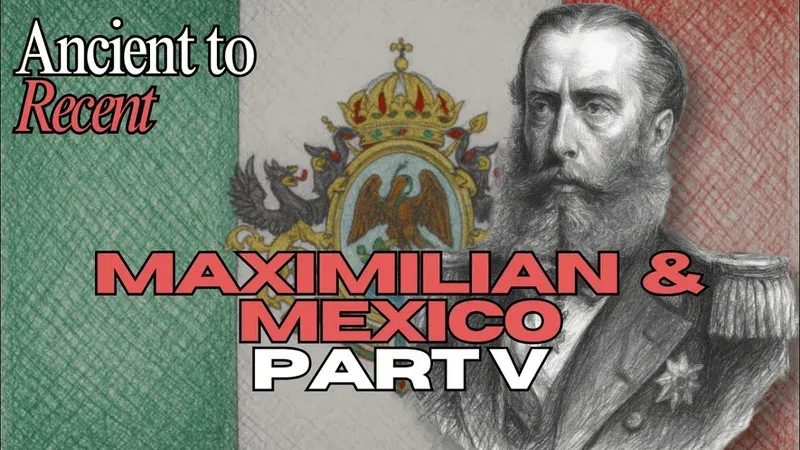
Maximilian of Mexico: The Rise and Fall of the Second Mexican Empire — Part 5
27 December 2025 · 52 min · Season 1
 Watch on YouTube →
0:0052:09
Also on
Rate the show
Ratings are how new listeners find the show. It takes a minute and it makes a real difference.
By early 1867, the Second Mexican Empire was fighting for its life. French troops had gone, Republican armies were closing in from every direction, and Maximilian’s authority barely extended beyond a shrinking patchwork of territory. Yet rather than flee, abdicate, or negotiate, the emperor chose to stand and fight, taking everything on honour, loyalty, and a belief that destiny had not yet abandoned him.
This episode follows the empire’s final months, from Maximilian’s fateful decision to take personal command of his army, to the desperate march toward Querétaro and the brutal siege that followed. Outnumbered, undersupplied, and surrounded, imperial forces fought with surprising ferocity as Maximilian, an emperor with no military training, revealed unexpected courage under fire.
As starvation, betrayal, and internal collapse took hold, opportunities for escape slipped away one by one. A last chance at freedom was lost to hesitation, while treachery from within finally opened the gates to Republican victory. Captured, tried by a military tribunal, and abandoned by the international community that had once sustained his throne, Maximilian placed his faith in clemency, and gravely misjudged his fate.
The episode concludes with the trial and execution of Maximilian, alongside his loyal generals Miramón and Mejía, and reflects on the wider consequences of the empire’s fall: the triumph of Juárez, the hard realities facing postwar Mexico, and the enduring human cost of foreign intervention, ideology, and civil war.
Join Joseph Parkinson for the dramatic conclusion to the story of the Second Mexican Empire, where honour collides with reality, illusion gives way to defeat, and history delivers its final, unforgiving verdict.
🎧 New episodes every Saturday
📲 Follow on YouTube, Spotify & Instagram @AncientToRecent
#SecondMexicanEmpire #MaximilianOfMexico #BenitoJuarez #Querétaro #MexicanHistory #HistoryPodcast #19thCenturyHistory #AncientToRecent
Read transcript
This transcript is automatically generated, so it may contain typos and misheard names.
A man does what he believes to be his duty, whatever the consequences. Emperor Maximilian of Mexico on the 5th of January 1867, after long and tortured deliberation and not a little bit of trickery and sleight of hand, Maximilian, Emperor of Mexico made his way to a farm outside of Mexico City, having secured the support for the continuation of his empire from his cabinet, for now, it was here he would set up camp to lead the fight to preserve his throne.
Maximilian, a man who so often swung between confidence and self doubt, was tense, anxious and tired. His empire was crumbling, his support squabbling. Many of his allies had abandoned him, and he had just weathered the storm of pressure both from liberal imperialistas and former French patrons to step down. But he had made his decision. Some might say a noble one. Others would argue his decision was selfish. He would stay as Emperor of Mexico. It was to Mexico that he had been called, and it was in Mexico that he would either bring victory, peace and justice, or, with a rosary in one hand and the Mexican flag in the other, would, like a Habsburg of old, die in glory. Welcome to Ancient to Recent.
My name is Joseph Parkinson, and in today's episode we conclude the story of Maximilian of Mexico and the Second Mexican Empire. Episodes of Ancient to Recent are out every Saturday and are available on YouTube, Apple Podcasts and Spotify. Maximilian's resolve had received an unlikely boost. His family, hardly the most resolute backers of his adventure in Mexico, had sent him a number of letters. Correspondents, both from his younger brother and mother, urged him to stay, evoking his Habsburg heritage, and to do as the Habsburgs had always done, to live up to their glorious lineage.
This steeled his resolve at a crucial moment. But Maximilian was still aware that the challenges he faced were monumental, and the time for comforting illusions had passed. He told himself that the Empire could be saved, even in the face of an emboldened rebellion led by Juarez and backed by the US, if all parties pulled together. Rally to the Flag ended the squabbling and bickering that had so hindered the imperial cause.
Maximilian's relationship with the French had totally collapsed, but he still kept channels open to Achille's Byzan, the military leader of the French expedition to Mexico. Maximilian allowed Byzan to meet with him. They spoke for hours, where Byzan laid out the Empire's desperate situation. Byzan was absolutely clear to Maximilian. Without foreign assistance, Maximilian would be defeated and the Empire would fall. Byzan, in one final desperate moment, urged Maximilian to end the bloodshed, abdicate, and return to Austria with his honour and his life. Maximilian, perhaps consumed by fatalism, refused. But Maximilian was not delusional. He understood that the situation was desperate and a heavy dose of reality was required.
Maximilian asked Byzan to do one last service to the Empire. Maximilian asked Byzan to attend a cabinet meeting and to explain to his ministers just how dire the situation really was. On the 14th of January, Byzan addressed the cabinet. Supplies were running low, morale was at rock bottom, food short, the troops clothed in brags. Most of the country was now under the control of war. Easter gorillas. No more reinforcements could be expecting from Europe. The situation at present moment is hopeless. The ministers listened in gloomy silence, but still, as one death nail of the Empire was hammered in after another, they would not relent.
They were deluded. Delusion was all they have left. Maybe it was the reality that they had, through their inflexibility, done so much to make this moment possible that prevented them from facing the truth. One by one the cabinet ministers spoke, each more enthusiastic than the last. Untold riches would be raised, 26,000 soldiers would be recruited, the army would be triumphant. The church would rally the people. The conservative ministers insisted that it was not the Empire that was unpopular.
It was not the Emperor that the people opposed. Rather, maybe playing to Maximilian suspicion, it was the hated French. They were the foreign invaders. They did not believe in the Empire. They had tried to force Maximilian to abdicate. Was it not, after all, the French who had burned so many villages and shot so many peasants, ignoring for convenience sake the atrocities committed by Mexican monarchists who'd burned their fair share of villages themselves?
The cabinet voted 28 votes for the continuation of the Empire, five against. The war would be fought to the bitter end. Raft of new legislation would be introduced, compulsory military service, forced loans to raise capital for the fight, anything to prepare the Empire for the bitter end. Maximilian had hoped that spelling out just how desperate the military situation was would convince the Conservatives to give in to some attempt to win popular support and compromise with the people by backing a National Convention to seek the opinions of the people and address their concerns. No, the Conservatives were set in their old authoritarian ways, incapable of bending, and what does not bend breaks. Maximilian had hoped to be an enlightened monarch. He had hoped to be a unifying figure who ruled above the division of politics, but now, with only the conservatives by his side, he had become little more than the leader of the cause of the right.
This further weakened the monarchist cause by alienating the few remaining liberal monarchists and driving them into the hands of Juarez. The battle lines were now drawn. The Civil War would be a repeat of the 1857 to 61 Mexican War of reform, Left versus right, blue versus red, conservatives versus progressives with no compromise. On the 15th of January, French troops who once entered Mexico City in glory to cheering crowds, now arrived in Mexico City to a very different reception, with these really the dashing columns who only a few years ago had come with bands playing in triumph.
They were haggard, starving, unshaven, their clothes torn, their skin bleached by the sun. They had marched in triumph all the way to the US border, victorious in every battle, only to retreat in ignominy. And now they were here in Mexico City, the last stop on their journey back to France. The French did not come alone. Travelling with them in their thousands were monarchist refugees, old men, women and children, some carrying all their worldly possessions on their backs. They were fleeing the advance of the avenging Republicans, who they knew they could expect no mercy from. The streets were crowded, prices ran out of control, shops boarded up or looted.
Queues formed outside the few storehouses still open as people waited for hours for what little provisions were still available. Speculation, fueled by desperation ran rife. Many did not wait for the French to depart, wanting to stay ahead of the high E to rebels and fearing the corridor to Veracruz and exile may close at any moment, made their way to the Atlantic ports as soon as they could. For them, the war was already over.
For them, the dream of the restoration of the monarchy had already died. For monarchists, the days of January 1867 were the end of the world. Everything that they had fought for, dreamed of, believed in so fervently was coming to an end. Only a fool would believe or even wish for this hell of civil war to continue. With the apocalypse upon them and no hope of redemption, upper class monarchists did the only thing left to do, They partied.
No point in leaving all this champagne for Juarez and the Republicans. After all, while parties more in mourning than celebration took place across the city, people drank themselves into oblivion, indulged their lusts and vices to their hearts content. Why not? After all, it's all over. On the 5th of February 1867, the French flag was lowered from the command post from which Bizen had directed the war. French columns streamed from the city towards Veracruz and the waiting fleet.
As they withdrew, they destroyed military stocks, even ones that could be used by the monarchist to fight on. Many French officers who had given so much but had again and again had their advice and counsel ignored, either by intransigent conservatives or by Maximilian himself, felt deeply embittered towards the Mexican Empire. They had fought so hard, only for their efforts to be undermined, and now it was all for nothing.
Let Maximilian and the monarchists face the fate they had done so much to bring upon themselves. From the balcony of the Imperial Palace, Maximilian watched as a long French column departed the city. In the capital, tensions rose. A public declaration was plastered on walls. The city must prepare itself for the coming of Juarez and the defense of the Empire. Republican forces were closing in. Diaz was advancing from the South.
In October 1866, Diaz had laid siege to the city of Ochaka. An Imperial Easter Relief column, comprised mainly of Austrian troops, advanced to the relief of the city, but Diaz had been informed of their coming and laid a trap, ambushing the column in the hills As they approached. There was a fierce fight with many casualties on both sides. Hundreds of Austrian soldiers were taken as prisoners. The Mexican monarchist officers were executed after surrendering. But it was not all roses for the Republicans. The tide had turned in their favor, but the war was not one yet.
There was still the tricky subject of the presidency. Juarez had been the president at the time of the invasion, but his turn was up and he was supposed to be succeeded by Jesus Gonzalez Ortega, the head of the Supreme Court. But Juarez had argued that this was not possible as Mexico was a war. The rebels had split between Pro Juarez and pro Ortega factions that began fighting each other. Pro Juarez forces were besieging the city of Matamoros, which was held by pro Ortega troops. In November 1866, the US armed forces crossed the Mexican border and occupied the city, trying to force talks to heal the rift between the two Republican factions, with little success.
The fighting continued until a compromise was reached. Pro Juarez forces were allowed to briefly occupy the city before heading South to resume the fight against Maximilian Jesus Gonzalez. Ortega, then in exile in the US, decided the time had come to press his claim to the Mexican presidency and began to prepare to cross the border and take office. U.S. officials, seeing that the division in the Republican forces would be more likely to worsen should Ortega press his rival claim to the presidency, thus spying the empire valuable time, decided to intervene.
They arrested Ortega in New Orleans and held him for a month before releasing him, only for Ortega to be immediately arrested as soon as he crossed into Mexico. The Republican succession had been settled by fair means or foul. With Ortega in prison and fires in command, the Republican cause avoided A potentially fatal split and allowed Republican forces to focus their attention on the final showdown with the Empire. With Diaz advancing from the South and Republican forces free to advance from the north, the noose was tightening around Maximilian's empire. Maximilian's forces control little more than a corridor between Mexico City and Veracruz, with a few dotted villages and fours controlled by Imperial Easter troops between. So greatly was Maximilian's dominion shrunken that by early 1867 Republican forces were little more than a day's March from the capital itself.
Morale on the monarchist side was at breaking point. Monarchist troops were badly armed, badly fed, often clothed in rags that they had worn since the day they were pressed into the service of the Emperor. Maximilian, fearing a total collapse or possible mutiny by his own European volunteers, did upon what must have seen to the liberal Emperor a great idea, a show of good faith, an appeal to honour. He knew that many of the European volunteers in his service had come to Mexico to serve out a commitment to a romantic cause, and it was to this sense of romance then Maximilian would appeal. Maximilian decided to free his 8000 volunteers from their oath of allegiance.
They would be free to go home with their honour intact, but so Maximilian thought, they would not do so. So overwhelmed would these men be by the showing of good faith and pure intention that they would surely immediately re enlist, fired with a new faith in the monarch's cause and giving the Empire a much needed boost. That was the plan anyway. But as romantic as such a notion may sound, many of Maximilian's Austrian and Belgian volunteers had had enough of fighting and saw no appeal of occupying Mexico permanently as corpses. The vast majority, as soon as their oath allegiance were annulled, packed their bag and headed home. Of the 8000 foreign soldiers in Maximilian service, only 173 officers and 650 men re enlisted to continue the fight. Though well intended, this was yet another naive own goal from Maximilian.
As morale created, one monarchist general had a more practical idea to restore faith. Miguel Miramon, A lifelong servant of the monarchist cause, decided to strike out on December the 28th. He led 400 men N he planned to meet despair with dashing bravery and decisive action. Victory was to the brave. The timid could only expect defeat and disgrace. He would lead his small band of men N his plan, a punishing March, picking up isolated Imperialista forces and recruiting men as he went.
He would take the fight to the Republicans. As Miramón went, N Juarez was heading South. Juarez arrived in the city of Zacatecas on the 22nd of January 1867 to a warm welcome from the Republican faithful. But just as he was settling in, certain that organized monarchist resistance had orbit collapsed, word reached of the coming of Miramon. Juarez, who had spent so much of the war on the run, who had time and time again abandoned so many headquarters, decided to stay and put up a fight.
On the 26th of January, Miramón fought his way into the city. Juarez was almost killed, Republican defenses collapsed and Juarez, only days before certain victory, was bundled into his carriage and forced to flee, Monarchist cavalry snapping at his heels as he was carried through dusty, winding roads in a desperate flight. Zacatecas fell to Miramon and his monarchist forces. A telegram sent to Mexico City provided a much needed boost to the imperial cause and Maximilians flagging morale, but the victory was temporary.
Miramon, with only 1500 men, could not hold the city as Republican forces closed in. Miramon, lacking supplies, had to head South or risk being isolated and picked off. He struck out to return to Mexico City before Republican forces could regroup. But he was too late. Republican troops were already closing in 40 miles South. Caught in open countryside, his column was attacked. Hundreds of monarchist troops were killed, hundreds more captured. Miramon evaded the Republicans and lived to fight another day. But his brother Joaquim Miramon, badly injured, was not so lucky. He became a central figure in one of the most shameful events in the history of a shameful civil war. Mexico had been, in one form or another, at war for decades. Hearts had hardened and hatred had seeped deep into the psyche of combatants on both sides.
Both monarchists and Republicans had come to see the other side as alien, inhuman, unworthy of life, fit only for the hangman's noose or the bullet. Every combatant, no matter which side they identified with, could tell many a tale of the wrongs done to them by their adversaries, the wounds they carried with them, the pain of lost relatives, and the desire to avenge themselves. In this terrible moment, with hundreds of monarchists now defenseless in the hands of the Republicans, the desire to settle the score took over.
First Joaquim Merriman was taken, put against a wall so badly wounded he had to be propped up and shot. Then the Mexican monarchists taken away, lined in front of the firing squad in batches and killed. Over 100 French soldiers who had decided to stay to fight on for Maximilian's cause were then taken. Many were shot at point blank range. To kill so many men took over an hour. This was not a frenzy. This was not the blind rage of war descending on men who had lost control.
This was cold blooded murder. On March the 12th the last French troops departed Veracruz. The French involvement in Mexico was finally at an end. The French had lost 8000 soldiers, spent millions of accounts, won dozens of victories, and committed many atrocities. And now they left with their dream of a French sphere of influence in Latin America lost. Maximilian was convinced by his Mexican generals to take personal command of the army.
The time had come for the Emperor to lead his people. Maximilian agreed. Even though he had never fought in a battle, commanded troops, or even fired a gun in anger. Mark his troops were now to be LED in battle by a man with no military experience at all as they took on the increasingly well armed Republicans under commanders with years in the field. On the 13th of February Maximilian led his army out of the capital.
He commanded 1500 men No2 dressed the same. They're weapons of every sort, from hunting rifles to old muskets, carried in every fashion, using dozens of different types of ammunition. The troops ambled rather than marched. His army lacked even basic discipline, looking more like an armed mob than the army of a great empire. Discipline was further undermined by the insistence of the Mexican officers that the few professional European officers who stayed to serve Maximilian must remain in Mexico City.
The column was further hinted by the crowds of children and women who followed behind. Maximilian's destination was the city of Querétaro, some 200 kilometers northwest of Mexico City, a stronghold of conservative, Catholic and monarchist sentiment. But as the army crawled through the countryside teeming with watching Jar Easter guerrillas, they could not expect to go long before the shooting started. The monarchists did not have long to wait.
The Jar Easters waited till Maximilian was far enough away from the capital to prevent immediate support coming to his rescue before they attacked. Jar Easter guerrillas picked off stragglers, murdered pickets, emerged from Bush and hillside to fire follies, and then melted away. Soon the disorganized shambles turned into a murderous death March. Under constant attack, Maximilian show considerable bravery, often exposing himself to danger men only feet away from him.
Struck down by Republican bullets, his army pressed on, taking casualties but also inflicting punishment on the Republicans themselves. The imperial army reached guitaro to scenes of jubilation. The emperor had come to relieve his people. Monarchist morale seemed to. Prove, with a few daring triumphs, had set the Republicans back and showed that the fight was not over just yet. Once safely in Querétaro, the question arose, What now?
Had taking the town achieved anything strategically? Or was this simply an exercise in monarchist's morale boosting? What was the plan? Furthermore, the plan was needed. Soon three republican armies were closing, each larger than Maximilian's. The Emperor's presence in Qataro served as a rallying point for the monarchist cause. Monica's forces began converging on the city. Maximilian was soon joined by the 3000 elite troops of General Ramon Menendez.
They had been fighting with great success in mature Khan, inflicting many's a defeat on their republican adversaries. Maximilian's forces now numbered 9000 men. His troops vary greatly from veterans to new recruits. Die hard to those pressed in service. Maximilian had a fighting chance, but only if he acted. However, Maximilian all too often wavered in such moments. His generals disagreed as the course of action. They were outnumbered 3 to one, but the Republican forces was spread across three different armies.
Ramon Corona LED 8000 men, Mariano Escobedo a further 12,000 and Vicente Riva Palacio another 7000. Miramon urged Maximilian to strike while he could crush the nearest republican forces under Escobedo and take the initiative. But Maximilian dithered, lost faith and decided to play for time. Monica's forces were still heading to Kitaro. He would gather further troops before acting. Crucially, the window of opportunity closed as the Republican forces linked up Maximilian, so used to the opulence of palace and Royal Court and made two simple rooms of a convent his home with little more than a Washington Basin and a cot for his personal convenience.
Time was not on the Monica's side, and neither was money. The army began running out of money to pay the troops, with a shortfall being made-up by pressing the local population for voluntary loans. The city had a relaxed atmosphere, with many offices entertaining themselves in the piazzas and cafes. However, the atmosphere was broken on the 4th of March when word arrived the enemy was near. A fever of activity broke out as preparations were made for battle to the West of the city, displaying themselves on the Crescent of the hill. The army of the Mexican Republic had come for its final showdown with its monarchist adversary.
The monarchist expected an immediate assault, but the Republican commander, Mariana Escobedo, instead took his time. He was in no rush. He slowly surrounded the city, sealing it off. He had an overwhelming advantage in men and supplies. Time, maybe even fate, was on his side. The town was placed under siege. Of all the places to be trapped, Kitato was not the kindest to defenders. Catano was in a valley surrounded by hills on three sides, with a river running through the north of the town. The steep hills allowed the Republicans to drag artillery into position and to direct their fire on any part of the town.
Maximilian was further hindered by the small size of his army, not big enough to defend all of the city, he set up on a strategy of fortifying key strong points. The river could act as a barrier to the north. To the South, a stone farmhouse would be converted into a makeshift defensive strong point, in the east a convent with thick walls could be occupied, and to the West a Rocky Hill could be made into a natural defensive position.
Maximilian made the convent his headquarters. From here he could lead the fight, aided by the convent's high towers, from which observers could call to him the positions of the enemies and allow him to direct his artillery in the reserves to the point of the greatest need. Escobedo surveyed the monarchist defences and pick spots for his artillery to have the most lethal impact. He also instructed his troops to cut the town's water supply provided by the local aqueduct. Time was firmly on the Republican side, and Escobedo had every intention of making every advantage count. On the morning of March the 14th, the artillery opened fire. The final battle had begun.
Maximilian was lucky not to be killed in the opening barrage with shells bursting all around him. But Maximilian had discovered something in himself, personal bravery. A man who had LED such a sheltered life did not flinch under fire and showed a reckless courage that inspired those around him. The town was attacked from three sides simultaneously. Republican troops charged from the South, but their attack was a disaster, being driven back by imperialist, A cavalry that inflicted heavy casualties. Republican forces rallied and came again, only to suffer in the same way.
To the north, the Republican troops tried to storm the bridge over the river, only to again take heavy casualties. But the Republicans were still able to occupy the houses on the other side, and Republican snipers picked off Monica's troops, restricting their movements and forcing them to keep their heads down. Republican forces brought up artillery to direct fire into the monarchist positions. Realizing that the town was lost without immediate action, the Prussian officer Prince Felix Sansam, who had fought on the Union side of the American Civil War, rallied.
His men drove across the bridge under fire, fighting from house to house, the roofs of the buildings ablaze. Doors burst through, a desperate hand to hand struggle broke out. Knives and daggers thrust between rib cages and shoulder blades. Revolvers fired a point blank range, life and death decided by no more than sheer muscle power and luck. The fighting was brutal, primal, intimate. Those unlucky enough to find themselves defenceless neither expected nor received mercy.
Republican soldiers were clubbed, shot, or bayonetted. Desperate pleas for mercy were met with the thrust of a Sabre. The houses were cleared, the battery taken by the monarchists, the Republican prisoners massacred. Republicans thought they had found a weak point in the fences. A Chapel had been lightly garrisoned, and Republican forces quickly occupied it. Monarchist troops had hacked a hole through the wall to make an assault, but the hole was too small and hindered the attackers, allowing Republicans to pick them off.
But the Monarchists, realizing the desperation of the situation, rallied and drove the Republicans from the Chapel. At the end of the first day of fighting in Monica's force of variable quality, running low on supplies, without even enough men to Garrison, the entire town had held on and driven the Republicans back, inflicting heavy casualties. Maximilian inspectors, troops, his men greeted him with wild cheers. He had proven his worth both as an able and a brave commander who inspired the respect and loyalty of his followers. Some of the Republican prisoners were brought before Maximilian. One, an American volunteer, refused to remove his cap in the presence of the Emperor.
When Maximilian asked him why a citizen of the United States was fighting in a Mexican war, the soldier replied, because I am a Republican. The monarchists were far from in the clear. They had held the Republicans back, but the city was still under siege and now the Third Republican Army had joined Escobedo. The Republicans could call upon nearly 40,000 men to Maximilians, barely 8000 for the Imperial Easters. The situation was becoming desperate, supplies running out, water running low, the roofs was stripped of lead to make bullets and shells. Sitting and waiting was not an option. If the Empire was to survive then they had to break out of the siege.
A war council was held and it was decided that the monarchist general Leonardo Marquez would lead the breakout. Marquez was also appointed Lieutenant General of the Empire, with wide sweeping powers to rule while the Emperor was under siege. In order to reorganize the war effort and lead the fight back, Marquez promised that he would return to lift the seat in two weeks. On March the 22nd, General Miguel Miramon launched a surprise attack which allowed Marquez to slip out of the town with 1100 cavalry. Monarchist morale was boosted, but two weeks later on the 10th of April, there was no sign of Marquez. Supplies continued to run ever lower. Horses and mules were slaughtered just to keep the army fed.
Desperate for news from Marquez, Maximilian took to sending spies try and breakthrough the enemy lines. Those captured would be displayed by the Republicans in full view of the monarchist lines hanging from their necks. Without word from Marquez, a decision was made. If they stayed put, the army would run out of supplies very soon and be forced to surrender. Best to make a break for it. On the 15th of April, Prince Felix Sansam arranged an attempted escape. Advancing forward undercover of darkness, the monarchists were suddenly spotted.
Flares went up, illuminating their position and directing musket and artillery fire towards them. Samsung was driven back. Morale so recently high, began to collapse. The chronic lack of supplies and the freshly hanged monarchist spies displayed each morning had the intended effect. Finally word came. A spy had managed to make his way through the Republican lines and then backed a guitaro to the disbelief of Maximilian and his commanders. And news was not good.
Marquez was not only not close, he wasn't even coming. Marquez had disobeyed orders, marched to Puebla, South of Mexico City, and attempted to assist another monarchy's force under siege, only to be defeated. Now Marquez was himself being besieged in Mexico City with no hope of relief possible. Maximilian resolved they would have to make another attempt to fight the way out. The date of the 22nd of April was chosen. The monarchist would strike just before dawn, hoping to catch the Republicans off guard. On the morning of the 22nd the monarchist advanced, rushing upon the Republican trenches.
A fierce bite broke out, but the Republicans, stunned, were routed and set to flight. The way was clear, but rather than immediately making a break for it, Minneman now hesitated. He insisted on securing his flanks before advancing, buying precious time for the Republicans to recover from the shock and confusion of the attack and rushing troops forward. The situation was further worsened by monarchist troops and civilians, many of them starving, seizing Republican supplies and gorging themselves on food. By the time Miramón was ready to advance on the hills, they were occupied, and a withering hail of musket fire met the advancing monarchists, who were yet again forced to turn back. The window of opportunity so costly opened now. Slammed, shot, trapped in the city, supplies running low, starvation settling in, Morale collapsed, men began to desert the Republican side.
Troops were reduced to eating cats to survive. The situation was made further worse by the constant sniper and artillery fire that took a further toll on those caught in the open. Yet another escape attempt was decided upon, this time to the east. The attempt was to take place on May the 13th, only to be delayed at the very last moment by a further 24 hours. As the hours closed in, few slept. Maximilian suffered from dysentery, tossed and turned.
Gradually, the defenders, one by one, let themselves give way to sleep. At 5:00 AM on the 14th of May, Colonel Miguel Lopez raised the alarm. He burst into Samsung's room to tell him that the Republicans were already in the city. They had launched a surprise attack and breached the defences. How could this be? How did none of the pickets raise the alarm? Samsung rushed to Maximilian, who raced outside, only to be confronted by Republican troops who amazingly, unbelievably, mistook them for civilians and let them purse. Fighting was raging in the streets. The city was aflame.
A group of monarchist soldiers and officers gathered around Maximilian who tried to rally the defence, but it was no use. The defenders were vastly outnumbered. The fortifications had been compromised, the war was over, the empire lost. Maximilian, to avoid further bloodshed, order the white flag to be raised. Maximilian was taken to the Republican commander Escobedo, who he offered his sword to and pleaded that the lives of his officers be spared. Maximilian was taken back to the convent he had stayed in when he had left.
He was an emperor. On his return he was a prisoner. There was 1 nagging question, how had the town been taken? By surprise. Maximilian was right to have his doubts. The night before, Colonel Miguel Lopez had crossed the Republican lines, appearing as a mediator trying to end the siege. He had promised to help the Republicans if they would spare Maximilian's life, but Escobedo had informed Lopez that only unconditional surrender would be acceptable. Escobedo had a counter offer 30,000 U.S. dollars if he would help take the town.
Lopez played Judas not for 30 pieces of silver 30,000 He would betray his emperor. At 3:00 AM on the fateful morning of May the 15th, Lopez have led Republican troops into the grounds of the convent, ordering monarchist guards to stand down, allowing the monarchist defenses to be breached before they even knew they were under attack. Lopez had then run to Samsung's room to inform him of the attack. To maintain the ruse, the troops who had let Maximilian passed had not actually mistaken him for a civilian, but believed it would be dishonorable to capture an emperor by trickery. With the town taken, some monarchist officers still refused to surrender, preferring to blend into the townsfolk in the hope of escape, maybe forming A monarchist underground to continue the fight.
Unwilling to allow the tragedy to drag on, Escobedo made a proclamation. All monarchist forces had 24 hours to surrender. After that they would be shot. On discovery, Ramon Menendez, a famous monarchist officer responsible for so many atrocities, was discovered, dragged to the town square and in view of the convent when Maximilian was held shot. Even with the Emperor in Republican hands, fighting across Mexico still did not end.
Mexico City was still held by Marquez, who ironically now refused to inform his troops of the Emperor's capture for fear that they would surrender, whereas beforehand Maximilian had kept news that Marquez was not coming from his own troops to prevent them from surrendering. Maximilian wanted to end the bloodshed. The empire was lost. Let us end the suffering. He offered Escobedo to abdicate if he would help stop the killing. But Escobedo had no authority to make such a deal. Only Juarez could decide Maximilian's fate and and Juarez had already made-up his mind.
There would be a trial, but not just any trial, A military tribunal Maximilian would not get. Maximilian would not get a platform in a courtroom to be turned into a martyr. The monarchist cause would not continue. The trial would be decided by military officers and Maximilian would be charged with the most serious crime against Mexico possible, treason. On May the 24th the prosecutor visited Maximilian and read out the charges. Maximilian asked to appoint his own defence attorney, requesting to summon 2 defence lawyers.
But Mexico City was still held by Marquez and the trial was to start as soon as possible. Felix Sansam understood that Maximilian was not going to get a fair hearing. The purpose of the trial was not to assess the evidence but to deliver a verdict. Felix Sansam was certain Maximilian would be executed. It would be fixed as justice. The only way to avoid the firing squad was to escape. Maximilian at first considered this dishonorable and refused, but some some pressed his case. Honour had been satisfied by the courageous fight to the very end to defend the city.
There was no honour in throwing his life away. Maximilian changed his mind. They would make a break for it. Some some recruited a Republican officer with a promise of money, but the plan was complicated by Maximilian's insistence that Miguel Miramon and Thomas Mejia, 2 of the most talented Monica's generals who had fought to the very end with Maximilian, must not be abandoned and must be freed as well. Notes for arranging the escape was smuggled in and out of captivity by Maximilian's malaise.
The instructions were sent ahead. 2 revolvers were to be acquired, as well as bread, biscuits, chocolate and red wine. Maximilian refused to shave off his distinctive beard, but a pair of glasses would apparently do the trick for the most recognizable person in all of Mexico. They would make a break for it. Horses would wait for them. They would flee to Veracruz and then on to Europe. The bribed officer insisted that the commander of the cavalry guard must also be bribed as well or no escape was possible. Sansom agreed.
The date was set June the second. They would make their break for freedom. The trial was proving complicated to arrange, not least to get the lawyers across enemy lines, which required multiple commanders from different sides to agree. Diaz allowed messages into Mexico City to inform the lawyers that they had been summoned, but then Marquez refused to allow them to leave. Eventually, Marquez let them go, but even now, tragedy followed the people of Mexico.
As the lawyers left the city, many of the entrapped civilians tried to flee, convincing Republican Gunners that they were witnessing an attempted Monica's breakout and opening fire in the crowd. The wife of Felix Sanson, the American born Agnes, travelled to meet Juarez and plead for an audience. She begged for mercy for the Emperor. But Agnes was not the only person calling for clemency. Friends Joseph, the Emperor of Austria and brother to Maximilian, had asked the US ambassador to intervene. the US also wanted Maximilian spared.
Executing Maximilian would damage the reputation of the Republican government and the Republican court internationally. Juarez agreed to postpone the trial till the 13th of June. Agnes passed the word to Felix and Maximilian. The opportunity for escape had now arrived. But the delay actually had the opposite effect. More time allowed Maximilian to indulge his talent for indecisiveness with longer time to the trial. Why rush the escape?
On the 2nd of June, Maximilian received a telegram. The lawyers were finally on their way. He decided it was beneath his honour to call such gentlemen from Mexico City, only to embarrass them by not being available to meet due to him having escaped. Maximilian never missed an opportunity to miss an opportunity. The next day, the guards were replaced and security tightened. The opportunity had passed. Maximilian's life now depended on the outcome of the trial.
But Maximilian was confident. Not that he would win. Sure, he would lose, but he was certain that he would then be let off. He would get a slap on the wrist. He'd be found guilty and then sent in his merry way to live his life in Austria. After all, this is the 19th century and he was a Habsburg monarch. People didn't execute heads of state in the 19th century. That's a very 20th century kind of thing. Jefferson Davis, the defeated leader of the Confederate States of America, had just been released from prison in the USA in May 1867 and he had LED a civil war in defence of slavery that had seen 600,000 people killed. Maximilian was certain even with a guilty verdict he would be set free.
In prison. Maximilian spent his time playing dominoes and conferring with his fellow inmates. They planned their future adventures. Mejia and Miramón would settle in Spain. Maximilian would live in London for a period of time, maybe Naples. Then he planned to visit Greece, perhaps sailed the Mediterranean as he had in his naval days. And there was, of course, the matter of his memoirism. A bestseller, no doubt. The trial began at 8:00 AM on the 13th of June. The accused sat on stools in front of a panel of judges, all military officers.
The charge treason. Maximilian denied the right of the court to stand in judgement of him. He was the Emperor of Mexico. They were the puppets of foreign capital and the usurper Benito Juarez. Maximilian seemed confident, but another escape attempt had been planned and thwarted yet again. It would all come down to his trial in the end. The trial lasted less than two days. On the morning of June the 15th, Maximilian was informed of the verdict and sentence guilty of treason sentenced. To be shot.
The execution was to take place at 3:00 PM the very same day. Maximilian's lawyers raised to make a plea, but to no avail. A priest was sent to issue the last rites in here confessions. Maximilian wrote a final letter to Carlota expressing his love and determination to face death like a brave soldier. The hour of execution arrived, but at 3, nobody came. Minutes turned to hours, but still nobody. At last the telegram arrived. The execution had been postponed for three days. Spirits rose.
Surely this was a pre lead to a pardon. All would be well after all, the international community would certainly pressure Juarez into showing mercy. The lawyers pressed their case, even arguing that as Maximilian, a devout Catholic, had already received the last rites, that in the eyes of the Church he was already dead and therefore there was no need to execute him. I would give them an A for effort. For that argument.
Maximilian sent a telegram to Juarez to plead for his companion's life. If someone had to die, then let it be him alone. But Juarez had fought the fight against monarchy and church his entire life. He knew that at every turn, just as the Hydras head had been severed, more sprang up. The only way to end this once and for all was to end this once and for all. The delay was not due to pressure, but rather to give an emperor more time to put his affairs in order.
On June the 19th, 1867, at 3:30 in the morning, Maximilian was awoken. He attended mass and sat down to a breakfast of coffee, chicken, bread and red wine. Maximilian removed his wedding ring and gave it to his personal doctor. Carriages arrived at the prison to take them to the place of execution, but before boarding the carriage, Maximilian turned to his final commanders, two of the most able, charismatic and committed Imperialista generals, Miguel Madamon and Thomas Mejias, and asked them.
Are you ready gentlemen? They replied, We are. Maximilian hugged them. They were led to the place of their execution, as if to complete the similarities with Christ at Calvary. Maximilian said to Miramón and Mejía. Soon we shall see each other in heaven. They took their place, Maximilian to the right, Miramon in the middle, Mejía to the left. Maximilian had paid the executioners to aim at his heart. Maximilian faced his executioners and said, I forgive everybody. I pray that everyone may forgive me, and I wish my blood, which is now to be shed, may forgive me. Long live Mexico, Long live independence. He stood before the firing squad. He looked at the sky.
It was a clear day. Maximilian's body was placed in the coffin and taken to the convent where he had been imprisoned. His body was treated with contempt by the guards and doctors. Juarez visited his body. It was expected that Maximilian's remains would be transported to Austria, but Juarez held on to the corpse to pressure Franz Joseph to recognize Juarez's government. On November the 25th, 1867, Maximilian's body was loaded onto a ship bound for Europe to complete one final journey. The ship arrived in Trieste back in the Austrian Empire on January the 16th, 1868.
Silent crowds had gathered in the port to pay their respects. A train carried the coffin to Vienna, or it was finally laid to rest in the Imperial Crypt, the resting place of so many brave and heroic Habsburgs, none more so than Ferdinand Maximilian Joseph Maria von Habsburg Lochringen, Emperor of Mexico. How should we think of Maximilian? He wanted to make Mexico great and prosperous nation. He was fired by a commitment to progress, enlighten government and reform.
He was not a man of his times. He was certainly in his attitude towards indigenous Mexicans, a man well ahead of his times. But good intentions and a kind heart don't always make for an effective ruler. Maximilian was indecisive struggle to tell the difference between his desires and reality, or between the imperative and the trivial. Maximilian was a decent man, but not a practical one. If he had been more rational, he would have realized that Mexico was a country he knew nothing of, and a cursory glance at the newspapers whilst sat in the safety of Vienna would have shown him that Mexico in the mid 19th century was a deeply divided and unstable country. That he, a man with no experience of governing, no knowledge of the country he sought to govern, would find it impossible to establish his rule over. But ultimately, the Maximilian made many mistakes and was highly imperfect as a ruler.
The collapse of the Mexican Empire was the work of many hands. Conservatives placed their own interests and their embittered desire for revenge over the good of the Empire. The Catholic Church did much the same, and Louie Napoleon did everything he could to force Maximilian to go, only to abandon him. But the cold, harsh reality is that the whole episode in the final Reckoning was doomed to fail without both the support of the Mexican people and realistically, the United States of America. History in the end, is kind to very few people. In 1870, Louis Napoleon will be tricked into going to war with Prussia by Prussian minister President Otto von Bismarck. Louis Napoleon had missed multiple chances to prevent a unified Germany.
Now he would be it's midwife. The French Empire, faced with the United forces of a German coalition led by Prussia, would be crushed at the Battle of Sedan. A German Empire would be proclaimed in the Palace of Versailles itself. Only two years after Maximilian's death. Louis Napoleon would lose his throne, the French Empire would join the Mexican in the history book, and Louis Napoleon would live out his days in exile in Chislehurst, Kent, just north of London, dying on the 9th of January 1873 from complications related to surgery to remove bladder stones. Maximilian would play some small indirect role in revenge on Louis Napoleon.
Prince Felix Sam Sam, one of the last commanders of the Mexican monarchists, would be an officer in his native Prussia's army, paying back the Emperor of France and bringing the French Empire to its knees, even if he was killed in the attempt. A Chile's Byzant commander of the French army in Mexico. Also fought in the Franco Prussian War. He commanded the French army that was forced to surrender in meds for which he was branded a coward.
He was sentenced to death for treason before escaping to Spain. He died in 1888 in poverty in Mexico. Marquez held Mexico City till June the 21st. He only surrendered when Austrian diplomats got word to the foreign volunteers that Maximilian was dead. The city was taken by the Republicans who showed no mercy to the defeated monarchists, hunting them down and killing them in an orgy of revenge. Marquez, however, escaped to Havana and died at the age of 93 in 1913. Jose Maria Gutierrez de Estrada, who did so much for 40 years to keep the monarchies flame alive, died in Paris in 1867. Benita Juarez has gone into the history books as possibly the greatest figure in Mexican history. The indigenous boy from Ojaka who led Mexico till 1872 where he would die in office.
He was a talented, principled and capable man who did more for the causes of republicanism and liberalism in Mexico than any others. But a new shining age of democracy did not await Mexico after Maximilian's defeat. Juarez, for all his talents, inherited an embittered, impoverished, bankrupt country with deep social divisions and shattered infrastructure, a land that had experienced little but war and rebellion ever since the cry for independence went up 60 years before. And for all his talents, Juarez could not change one simple reality, Mexico's proximity to its northern neighbor. After repeated attempts at election and rebellion, Porfiro Diaz would eventually seize power in 1884, ruling till he was overthrown in a military coup in 1911, dying at the age of 84 in exile in 1915 in Paris of all places. Under his reign, Mexico finally achieved some stability, but at the price of grinding authoritarianism and submission to U.S. economic interests and the D as much of the Mexican economy and infrastructure, from railroads and coal mines to ports, banks and oil wells, were owned by the United States and operated to serve the interests of Washington, not Mexico City in Europe.
Kolota lived at Miramón, Kolota Maximilian's European residence in present day Slovenia. She was kept in isolation. Her family hid the news of her husband's execution for a full 6 months. She never recovered and lived on for 60 years, slipping from periods of lucidity to periods of detachment for reality. She lived in the outskirts of Brussels, cared for by her family, A sad and lonely life. She would wander the castle crying out for Maximilian when she was discovered decades after the collapse of the empire, playing the Mexican national anthem on the piano.
She would die on the 19th of January 1927. Franz Joseph led his empire into the First World War, condemning the Habsburg realm to defeat and disintegration. In 1918, two years after his death, Carlo to outlived them all, Juarez, Louis, Napoleon, Byzan and Franz Joseph. But in the end, the ultimate victims were not the Austrians, the French, Louis Napoleon, Maximilian or Benita Juarez. Those who paid the price were the people of Mexico, and this is ultimately their story. All sides proclaimed their desire to act in the name of the Mexican people, but never with their consent. It was the sons of Mexico who filled the armies and the graves.
It was Mexican villages that were burned, Mexican wealth that was squandered, and after the last French soldiers had departed, after the last battle fought, after the Mexican Empire was laid to rest and the Mexican Republic was proclaimed, it was Mexico that would find, at the end of all of this sad and painful story, no peace. Thank you for listening to Ancient Teresen, my name is Joseph Parkinson. Episodes of Ancient Teresen are out every Saturday are available on YouTube, Spotify and Apple Podcasts.