
#29
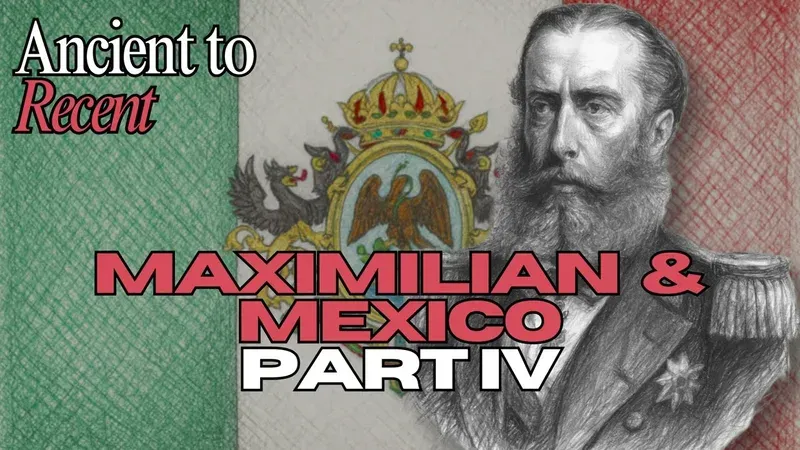
Maximilian of Mexico: The Rise and Fall of the Second Mexican Empire — Part 4
20 December 2025 · 46 min · Season 1
 Watch on YouTube →
0:0046:56
Also on
Rate the show
Ratings are how new listeners find the show. It takes a minute and it makes a real difference.
By late 1865, the Second Mexican Empire was beginning to unravel. French support, once the foundation of Maximilian’s throne, was wavering, Republican resistance was intensifying, and pressure from a resurgent United States threatened to turn Mexico into a flashpoint for international conflict. Yet at the very moment the empire required decisive leadership, Maximilian seemed increasingly detached from reality.
This episode traces the slow collapse of imperial support abroad and unity at home. As Napoleon III liberalised his regime in France, Republican voices turned against the Mexican adventure, exposing the human and financial cost of the war. With the American Civil War over and the Monroe Doctrine reasserted, Washington made clear it would tolerate no European monarchy in the Americas, forcing France toward withdrawal and leaving Maximilian dangerously exposed.
At the heart of the episode is Maximilian’s fatal indecision. While French troops prepared to leave, finances disintegrated, and Republican forces gained momentum, Maximilian vacillated between abdication and defiance. His wife, Empress Carlota, launched a desperate mission to Europe to save the throne, only to descend into paranoia and mental collapse as every door closed before her.
As conservative forces manipulated imperial loyalty, foreign diplomats meddled recklessly, and Maximilian convinced himself that destiny demanded he stay, the final chance to escape disaster slipped away. What remained was an empire sustained by illusion, honour, and pride, facing enemies on all sides and standing on the edge of catastrophe.
Join Joseph Parkinson as the Second Mexican Empire enters its terminal phase, where abandonment, self-deception, and international realpolitik combine to seal Maximilian’s fate, and prepare the ground for a final, bloody reckoning.
🎧 New episodes every Saturday
📲 Follow on YouTube, Spotify & Instagram @AncientToRecent
#SecondMexicanEmpire #MaximilianOfMexico #NapoleonIII #EmpressCarlota #BenitoJuarez #MexicanHistory #USForeignPolicy #HistoryPodcast
Read transcript
This transcript is automatically generated, so it may contain typos and misheard names.
My position is false, and yes, I cannot abandon it. Maximilian, Emperor of Mexico. Since seizing power in 1851, Louis Napoleon had ruled much as his grandfather. Without the burden of legislative or constitutional constraint. There was the veneer of legal government, and he had made a point of having his ascent to the throne legitimised by a referendum, heavily weighted as it was, in his favour. But France was, no matter the window dressing, no democracy, not even won.
By the standards of the 19th century, Louis Napoleon was, if we're honest, a dictator. An enlightened one, but a dictator nonetheless. This was a reality Napoleon did not care to have pointed out to him, such as when Gutierrez de Estrada and the visiting Mexican monarchists had made such a faux pas whilst guests of the Emperor in Paris. But Lewis Napoleon, though convinced of his own greatness, yearned for legitimacy. He yearned to be seen as he saw himself, the rightful leader of France and the French, and this desire did not just extend to the other heads of the great empires and imperial houses of Europe, but to the streets and slums of France. He was France, and he wanted to be seen as such by his people. If this was to be so, then Louis Napoleon had to do something uncharacteristic.
He had to do something one could argue was admirable, something those who have grasped the mantle of power, those who have held Zeus's lightning bolt, are loath to do. He had to give it up, but he would never do such a thing, right? At a meeting of Louis Napoleon's cabinet, as his advisor sat around the table, you can only imagine the sense of astonishment. Louis Napoleon, the man who had seized power, abolished the Republic and crowned himself Emperor, announced that giving up power was exactly what he planned.
He informed his stunned advisors that the French Assembly would be able to debate, criticize and vote on the annual address from the throne, and that additional expenditure, not in the emperor's speech, would require the approval of the French Parliament. New freedom was not just to be limited to the assembly. Newspapers were to be allowed to report on legislative affairs and to comment, criticize and satirize. Napoleon must have thought this is a pretty smart move. More kudos for him.
The great Liberator who had championed so many progressive causes abroad was now bringing freedom home. And why not? Sure, his government would now be criticized, but that didn't matter. He would always get what he wanted anyway. You see the French National Assembly was almost totally loyal to him. Mid 19th century France had no lack of committed Republicans who opposed his rule that they were almost entirely shot out of the halls of power.
Firstly, France had a very limited franchise that denied most people the vote and secondly Republicans had boycotted the parliament after Napoleon came to power because to take their seats required all members to swear an oath of allegiance to the crown, which is Republicans. They obviously could not do so. Parliament was by definition, by design, filled with pro government, pro monarchy, pro Lewis Napoleon delegates. However, something had begun to change. A few Republicans thought that there was no better place to bring down the French monarchy than from inside it's own parliament.
In 18585 Republicans swallowed their pride and took their place in the assembly. This decision would have a profound impact on the future of France and also for Mexico and the throne of Maximilian. Welcome to Ancient Recent, My name is Joseph Parkinson and in this episode we will continue the story of Maximilian of Mexico and the Second Mexican Empire. Episodes of Ancient Recent are out every Saturday and are available on YouTube, Spotify and Apple Podcasts. One of these Republicans was a flamboyant figure by the name of Jewel Favre.
A fiery speaker with a striking appearance, he deployed satire and a rapier wit to slash at the government till he drew blood. He had come to prominence acting as the defence lawyer of Felici Ossini, the Italian assassin who had almost taken the life of Louis Napoleon. Favre, though a lonely figure in an overwhelmingly monarchist parliament, seemed to enjoy the odds. He took every opportunity to ridicule Napoleon's adventure in Mexico.
What business had France placing a monarch in a country on the other side of the world? Why were French mothers burying their sons for a Habsburg? Archduke Louis Napoleon insisted that the war was all but over. Juarez was as good as defeated. The Mexican people were grateful to the French for their liberation. But. And there was always a bot. Another injection of cash and French troops was required more. There was always more.
Favre demanded to know if things were going so well, when could France expect the return of her sons? Alive, preferably. Why was more money needed? Though the pro government press in France was constantly filled with the reports of glorious victories and the receptions of French troops by grateful Mexican people, the new freedoms allowed French papers to start printing a different story. Reports of burning villages in atrocities carried out by Monica's guerrillas began appearing in the papers.
This was further fuel to Favre, who denounced these atrocities and asked how the sons of France could be asked to participate in such crimes. Amongst the French Republic, tired from years of constant conflict, having fought not just grinding war in Algeria but also major confrontations with Russia and Austria in quick succession, the deployment of more French troops to Mexico was deeply unpopular. Further adding pressure to the situation came from the US.
During the American Civil War, the US had been distracted and unable to exert any influence over affairs in Mexico. Maximilian and Napoleon had taken the opportunity to establish the Mexican Empire and believed that Southern victory would deliver security for the Mexican throne. But with the South now crushed and the US possessing both a vast army and determined to exert influence in the Americas, the US was unlikely to allow the establishment of a monarchy backed by a major European power.
In what Washington saw as it's sphere of influence, the United States relationship with Mexico worked just fine as far as Washington was concerned. Mexico was weak, divided and alone, just as the US wanted it to be. In December 1865, the new President, Andrew Johnson, addressed Congress where he declared that the United States would never accept any European backed monarchy in Mexico. Johnson sent the US ambassador to France to instruct the French that the United States was willing to go to war over the issue and demanded the end of French support for Maximilian.
With the civil war in Mexico dragging on, the cycle of violence ever intensifying, and the US now threatening intervention, how is Maximilian busying himself? Surely with the pressing affairs of state, Well, not exactly what was Maximilian doing? He was decorating. Maximilian was considering himself not with military matters or urgent financial reforms, but instead with redesigning his country retreat. The growing threat from the US and Maximilian's unwillingness to take the situation serious LED Napoleon to make a decision. He would end support to Maximilian. French troops were coming home.
The Mexican Empire would stand alone now, after so much blood and treasure. How did Napoleon present his decision to cut and run, abandoning the Mexican Empire? He did it the same way that all great powers always do when they're caught in an intractable conflict that they know is going nowhere. He announced he'd won. Louis Napoleon told the French Parliament that the Mexican Empire was now established, the Republicans had been defeated, and Mexico was on firm footing. Therefore, French assistance was no longer required. If anyone is having images of George Bush standing in front of the Mission Accomplished banner during the Iraq War, I think you're not alone.
Carlota and Maximilian spent their days with their courts dining and cultivating their gardens. But Maximilian and Carlota seem to be drifting apart. They did not sleep together, they rarely spent time with each other, sometimes going weeks apart, Maximilian preferring the company of other ladies. Carlos's personal distress was further added to by the news that her father, the King of Belgium, had passed away. And then word arrived in Mexico the worst possible news. Louis Napoleon had announced the withdrawal of French troops and the end of French support.
Maximilian was stunned. The promises, the assurances. Hadn't Napoleon told him that no matter what, France would always be there for him. And now, with the war almost over, but for the final push, at the exact moment Maximilian needed French support the most, now was the time Louis Napoleon was leaving him. Maximilian was beside himself. Things went from bad to worse for Maximilian. Jacques Linglie, the minister Napoleon has sent to sort out Mexico's books just days before announcing his long needed plans of financial reforms, died. Tensions began to rise in monarchist circles. This was further added to by the killing of the Belgian ambassador in an ambush just outside of Mexico City, something that Carlota, A Belgian Princess, was deeply shaken by.
Even only a few miles from the very heart of the Empire, the Republicans were gaining ground. Maximilian was determined to save his throne, even if that meant going alone without French assistance. Maximilian was often full of energy, but it was discerning between the trivial and the fundamental he's so often struggled with now. Maximilian threw himself into the project of saving his crown. Reforms of the public finance were launched.
A new army was to be created between Austrian and Belgian volunteers, Mexican monarchists and the French troops still in Mexico. Maximilian could call upon 28,000 men, a not insignificant force. But would it be enough? The scale of Mexico's financial problems were now becoming apparent. Soldiers and civil servants had gone months without pay, while Maximilian had drunk champagne and squandered fortunes on redesigning palaces. Volunteers had not received supplies. Many of his men lacked the fundamental materials for waging war.
Maximilian decided that an emissary would be sent to France to demand Napoleon honour his promises and to negotiate a new treaty with the French government. But on arriving, Napoleon flatly turned down their request, insisting there was nothing he could do. Carlota would not take no for an answer. If Napoleon would not honour his promises, then she would shame him. It was one thing to refuse a diplomat, quite another an Empress.
She departed for Europe, determined to save her and Maximilian's throne. Bad news followed. The new King of Belgium, Leopold, refused the call for more volunteers and the US began putting diplomatic pressure on the states of Europe to not allow any more volunteers to depart for Mexico. From now on, any European state that allowed it's citizens to enlest a fight in Mexico could consider the US an enemy. Under American pressure, Franz Joseph refused to allow Austrian volunteers gathering in Trieste, who had already signed up to depart.
Even Franz Joseph was abandoning Maximilian. Maximilian oscillated between determination and despair, one minute ready to fight to the last man, the next preparing to throw the towel in. Carlota was convinced that she could change Napoleon's mind, but she did not reckon with events in Europe. The storm clouds were growing and the environment France found itself in was suddenly much less secure. In 1866 the Austro Prussian War broke out. Austria and Prussia had been to war together against Denmark in 1864 over the provinces of Schleswig Holstein, German speaking regions of Denmark that Denmark wanted to more thoroughly integrate into the Danish state. Austria and Prussia, acting as the defender of German speaking peoples, had easily defeated the Danes and divided the spoils between themselves.
But the Prussian Minister, President Otto von Bismarck, who was determined to unify the German state and create a single united Germany under Prussian leadership, knew that he would have to eject Austria from Germany if his dream of unification was to come true. Bismarck engineered a crisis that allowed Prussia to declare war on Austria. Bismarck had cleared the path diplomatically before the declaration of war, securing an alliance with Italy which would also attack Austria and the neutrality of France with a promise of territorial expansion if France should sit the war out. Louis Napoleon, believing that the war would be long and only result in grinding 2 of his major European enemies down, was happy to see Austria and Prussia fight it out. But things didn't go as expected. Prussia, it's army more advanced, swiftly defeated Austria and took a major leap to creating a knighted German super state.
To make things worse for France, Bismarck then reneged on his promises to Louis Napoleon. France was suddenly faced with an enlarged Prussia in a position of power to bring the last few southern German states under its leadership. With this new threat on France's border, France could no longer spare a single penny or soldier on foreign adventures, Not when the Empire's self was imperilled. It was into this that Carlota arrived, filled with righteous indignation, determined to confront Louis Napoleon.
Louis Napoleon refused to meet her at 1st, instead sending his wife, Empress Eugenia, to console her. Eventually, Louis Napoleon gave in and granted Carlota an audience. Carlota reminded Louis Napoleon of his promises, how he had begged and pressured Maximilian to accept the throne, done everything he could to sue Carlota and Maximilian's doubts, and now he was just abandoning them. Louis Napoleon broke into tears and told Carlota there's nothing he could do.
Again, Carlota demanded to meet with Louis Napoleon, this time presenting letters that the Emperor himself had written, showing in excruciating details the length Louis Napoleon had been to to pressure Maximilian to accept the Mexican crown. Wasn't it the case that Louis Napoleon had almost declared war on Austria to force Maximilian to go? Was that all a show? Did the word of the Emperor of France mean nothing? What promises to be made today and then broken tomorrow? Is that the sort of country France is? Is that the sort of Emperor Louis Napoleon is? Is this who the descendants of Napoleon the Grey have become? So furious was Carlota that she even demanded that Napoleon dissolve the French parliament and if need be, put the question to the French people themselves to let them decide. Faced with the collapse of her empire, Carlota's mental health began to deteriorate.
Carlota was not put off by Louis Napoleon's betrayal. She would take her appeal to a higher authority. Louis Napoleon was a mere emperor. She would take her case to God's representative on earth. She would take her case to the Vatican. Carlota made her way to Rome to plead with the Pope. She would beseech the Pope to sign a Concorde act with Maximilian, heal the rift, rally conservative and Catholic support, and save the empire. But Carlota was cracking under the pressure. She grew suspicious of her ladies in waiting who had travelled with her from Mexico, believing they were plotting to poison her, perhaps on behalf of Louis Napoleon himself, the great traitor, the liar, the betrayer. She became convinced that Louis Napoleon was out to kill her. She'd locked herself in her room and ate alone, away from the others.
On September the 27th, 1866, she made her way to the Vatican and she met with the Pope. We do not know what they discussed, but it is clear that her grasp on reality was slipping. She was obsessed with plots to poison her at banquets. She would not eat any prepared food, only fruits and nuts, which she inspected first at great length to see any signs that they had been tampered with. She would not drink the water in her hotel, instead stopping her carriage as she was being driven through the streets of Robe. She took a picture and filled it in a public fountain. To the bemusement of her entourage. She became hysterical, convinced all around her was spies sent to murder her.
She made a panicked, unannounced visit to the Vatican, demanding to see the Pope, screaming about plots to do her in. She insisted on staying or else she would surely die. The Pope tried to convince her to leave, but eventually he let her stay in the library for a night before ushering her to a nearby convent. Her behaviour grew further deranged, howling and screaming. At one point she tried to eat a pot of Stew with her bare hands while it was still cooking, receiving severe burns that made her pass out from the pain.
Her paranoia grew so bad she took to demanding that her servants prepare her food in front of her. Soon this was not enough, and she began keeping live chickens in her room for her to kill and eat herself. In Mexico, things were not going well from the Imperial Easter cause. French troops continued their southern withdrawal, surrendering more of the country that they had gained through much hard fighting. Imperialista troops set out from the Atlantic port of Matamoros.
On their retreat. They suffered a major defeat at the hands of the rejuvenated Republicans. A column comprising many Austrian soldiers marched for days under constant attack and baking, some with little water, only to be wiped out. 120 Austrians were killed and hundreds more taken prisoner. This was the first major victory for the Harisa forces for some time. It provided A timely boost to Republican morale and a further blow to that of the imperialistas.
In the South, Porfira Dias had escaped capture and rallied Republican forces. Now the Empire was being squeezed in all directions. With word of the French withdrawals spreading, US support for Juarez beginning to tell on the battlefield, and renewed Republican military activity, some monarchists began to melt away from what seemed all of a sudden a doomed cause. Maximilian's control over the country had always been tenuous. Now the monarchists controlled little more than a strip of land between Mexico City to Veracruz on the Atlantic Coast, the same town Maximilian and Colota had arrived in to begin their reign in 1864.
But it was not all smiles. On the Republican side, Juarez had a particularly embarrassing problem. Juarez's legitimacy came from being an elected official, but his term in office, though interrupted by war, was ending, and the law stated that Juarez must step down in favour of the head of the Supreme Court, Jesus Gonzalez Ortega, who Juarez had defeated in the 1861 presidential election. But this was war, and Juarez argued that due to extenuating circumstances, his term must be increased.
Ortega was not willing to accept such a rule. His time had come and he demanded to be recognized as the legitimate President of Mexico. Ortega, as head of the Supreme Court, announced that Juarez's decision to stay in power was illegal and that he, Ortega, was in fact the new president. Mexico now had two presidents and an emperor, was a Republic and the monarchy was embroiled in the civil war whilst also being invaded all at the same time.
In yet another twist, pro Ortega and pro Juarez Republican guerrillas, when not fighting pro Maximilian monarchists began fighting each other. It seemed that the only thing anyone in Mexico could agree on was who should not be in charge. On the Monica's side, Republican disunity offered little respite. Many began abandoning Maximilian. Liberal minded government ministers resigned and Maximilian was now forced to turn hard to the right to rally the only support he had left. The old conservative Catholic faction who had brought him to power, dreaming of a return to pre independence days who he had done so much to alienate.
He couldn't rely on them to love him, but he certainly could rely on them to hate Juarez and the Republicans. So Maximilian, the self declared enlightened monarch who had so outraged conservative opinion, now tried to make nice with his former allies. Maximilian was uncomfortable with his conservative bedfellows, but he was also determined to stay and they were the last showing town. Louis Napoleon was growing angry with Carlota and her rampaging around Europe, telling anyone who would listen about his betrayal and suppose attempts to murder her.
Louis Napoleon said a string of angry letters to Maximilian outlining his position. The French army would stay for one more year, but no more money and no more reinforcements. Napoleon urged Maximilian to endeavour to save his throne, but, if this was not possible, to return to Europe alive. Maximilian continued to swing, one minute bellicose, the next morose, a bundle of defiant energy and a morass of depression. He consulted his Austrian advisors. Should he resign?
His court was divided. Some said he should lean into his conservative support. He was a Habsburg, after all. Hapsburgs didn't give up. Others urged him to get out while he still could. Maximilian, ever the liberal, believed A sufficient showing of loyalty from the people could overcome any material deficiency. Hit upon an idea he would call a National Congress, he would let the people of Mexico decide. He announced he would await the answer in a small town near the port of Veracruz.
If the vote went in his favour, then, with the support of the people, the backing of both the conservatives and the Catholic Church, he would have the power and the legitimacy to return to Mexico City in triumph and save his empire. If the vote went against him, he would depart Mexico with a clear conscience. It's at this moment that the first word of Carlota's mental deterioration reached him. Maximilian, yet again, was utterly crushed.
Louis Napoleon had abandoned him. His brother Franz Joseph would not help him. And now his wife, his strongest support and closest confidant, was giving way to mental breakdown. Maximilian's Austrian advisers increasingly saw the writing on the wall. The Empire was doomed. It had been fun. Time to get back to Austria, time to live, to tell the tale. Maximilian shattered was not quite ready to quit. He wanted to give the National Convention a chance, but his conservative supporters believed that leaving Mexico City was a first step to abdication and announced that they would resign en masse if the emperor left the capital. Maximilian consulted with his French commanders still in Mexico.
They agreed that if the worst came to the worst, they would take over the administration of the Empire. This freed Maximilian to withdraw to Veracruz. On the 21st of October, Maximilian left the capital to make his way to the coast. Napoleon had sent representatives to Mexico specifically to convince Maximilian to abdicate. It was bad enough the whole episode was collapsing in disaster. It didn't need to descend into tragedy with a dare to Maximilian. Whilst in Mexico, the French diplomats wrote reports to Napoleon on the state of the country. Finances were in shambles.
French, Belgian and Austrian troops in disarray. Mexican monarchist troops were beneath contempt, little more than a band of cut throats. French officials, in their correspondence with Paris, unanimously pointed the finger of blame at one person. They pointed it squarely at Maximilian himself. Maximilian, feeling utterly defeated, informed the French officials that he had made a decision. He would abdicate and return to Austria as a private citizen. But Maximilian set conditions for his abdication. The black decree that allowed for the killing of civilians was to be annulled.
The war was to come to a negotiated settlement. There was to be no reprisals and his debts were to be settled. If this could be agreed, then he would renounce the throne the second time in his life. The French officials, waiting anxiously under orders from Louis Napoleon that no matter what happened, do not let France be blamed for the death of Maximilian, were relieved they had accomplished their mission. Maximilian made his way to the city of Orisaba, and he was greeted to his astonishment by an ecstatic reception.
It was like the old days, bands playing, Franks waving A pristine military guard of honour. For the coming of the Emperor, for the coming of their emperor. Wasn't it all lost? Wasn't the empire doomed? How come this rapturous applause? Maybe Maximilian had been too pessimistic. Here he is in Orizaba. And the people have come out to display their love and affection for him. How could this be? Wasn't it the French who had now abandoned him and pressing him to give up his throne, who had flooded him with such reports of endless negativity?
But hadn't hadn't the French proven themselves to be untrustworthy? Isn't Louis Napoleon breaking his word, going back on his promises? And now Maximilian is seeing for himself that the the people, the Mexican people, his subjects, they were loyal after all, With them at his side, how could he lose? And more to the point, he took a holy oath to be their emperor. How could he abandoned them? Maximilian had come from across the sea, from another world, and now he could see that his people were desperate for him to stay. Maximilian began to reconsider, yet again, showing inability to distinguish between what he so dearly wished to be the case and the cold, hard reality.
But but no. We have made our minds to leave, and we must. The war is going badly. We, we must leave. Maximilian wavered, but his advisors still pressed him to return to Austria. A ship was readied, His possessions were loaded. All were set to depart and to leave Mexico behind. Austria home, the land of his ancestors called. He had missed Austria. He had enjoyed Austrian food, a court, and inflicted it on his courtiers.
He had spent time singing Austrian songs with Austrian officers, remembering the romanticized version of his life back in a Habsburg heartland. But what sort of life would await citizen Maximilian Habsburg? He would be a failed emperor who had engaged in a embarrassing flight of fancy adventure on the other side of the world, only for it all after much blood and treasure to come crashing down. He had renounced his claim to the Austrian throne, something Franz Joseph was hardly likely to grant him back.
He could not even go back to his old life, with its rigid limitations and frustrated ambitions. He would be a diminished, frustrated, even laughable figure. The life of a dilettante and wastrel awaited him wandering around Vienna. A curiosity, a living museum piece, No purpose, no meaning, Just reading the paper, smoking and drinking until he one day died. A life of such potential squandered. His concerns were further added by reports in European newspapers that he may not be welcomed back in Austria. He may even be denied entry to the country. Humiliation beckoned.
Meanwhile, his advisors, not fooled by the suspicious appearance of crowds suddenly cheering, were eager to get Maximilian on his way back to Europe. Let's worry about how to spend retirement later. Right now it's being shot by hoarista gorillas that's keeping us up at night. In Mexico City, the Conservative cabinet ministers who had offered their resignations now withdrew them, faced with the collapse of the Empire, the return of Juarez and his Republican gang, who were no doubt in little mood to treat with them and would have little need to do so after defeating the conservatives in what would soon be not one but two civil wars.
Now realised that however imperfect Maximilian may be, he would be better than any empowered Republican government. The Austrian advisers had reason to be suspicious about the ecstatic reception of Maximilian in Orizaba. The whole thing had been a show, a Potemkin display of loyalty organised by the conservatives. To touch exactly the nerves in Maximilian, the conservatives knew would be most likely to deliver the desired reaction. The Conservatives now made pilgrimage to Maximilian's cause.
In a scene reminiscent of the fawning and praising when Maximilian accepted the throne in Austria, the Conservatives now pledged not just their loyalty, but their support. They would throw their resources behind Maximilian. Troops of the finest quality, never before seen on the battlefield of Mexico, would be raised by the Conservatives to sweep the country clean of rebellion and treason. Funds so conspicuously lacking would materialize, summons descending like manna from heaven to fill the empire's coffers. Where such fortunes and armies had been up to this point was a question conveniently forgotten.
Every rhetorical trick of the trade was deployed, begging, pleading, throwing themselves on his mercy, calling to his sense of personal honour. Remember your people, remember your ancestors, remember your promises. Your Majesty, Your Highness, we are but clay in your imperial hands. Anything to play on Maximilian's guilt, his fear of the future, his sense of himself as a great man, Anything to convince him to stay. The Conservatives left nothing to chance.
They enlisted a further ally, Peter Campbell Scarlett, the British ambassador to Mexico. The Conservatives convinced Campbell that the French were determined to pull out, as they had struck a deal with the US to share the spoils of the Americas between them and squeeze the British out. Scarlett was all too eager to believe that the conniving French would engage in dastardly underhanded double dealings to Enbridge themselves. Scarlett, acting alone and without any authorization from the British government, allowed himself to be pressed into the service of the Conservative cause. Scarlett visited Maximilian and passed on to Maximilian the story of underhanded US and French collaboration to steal Mexico from Maximilian coming from the British ambassador. Maximilian assumed that this must be official information directly from the government in London and must further indicate a change in policy on behalf of Her Majesty's Government, a conclusion that Conservatives were all too willing to allow Maximilian to come to Maximilian whoever showed a rare moment of resolve.
Even as he was being pulled towards staying, his advisers were still urging him to return to Austria as soon as possible, before it was too late. Maximilian was at his heart, a Liberal figure, and he knew these Conservatives who now bowed and scraped before him. He had endured their sniping for years. He had seen them fighting his every reform. He had witnessed them withdrawing like petulant children when they weren't given what they wanted at the first opportunity.
Where were they when the Army needed recruits? Did they send their sons? No, their sons stayed on their estates. Where was their generosity when the soldiers hadn't been paid for six months? Did they put their hands in their pockets? No, they had their hands out, demanding more and more and fighting tooth and nail any requests for sacrifice, and now they were promising to be good patriots. Maximilian had no urge to be the puppets of such men.
Scarlett's intervention had an effect on Maximilian, but he still clung to his decision. But the more he brooded about his future, the more he dallied in Mexico, the more his doubts grew. Maybe this time it would be different. Maybe the Conservatives had really been affected by His Majesty. This time he wouldn't have to rely on the hated French and their constant pestering about difficult financial reforms. Maybe you would have British support.
The US would think twice about war with the largest empire in the world. After all, the US, for all it's constant denunciations of European monarchies and the Americas, did not dare lift a finger against the British colonies, soon to be renamed Canada and forged into a single state in 1867. Maybe fear of the British Navy would protect Mexico. As Maximilian's doubts about returning to Austria grew, he now received a reply to the letter he had sent to the French outlining his terms for abdication. The French officials had signed agreeing to all his terms, but there was something suspicious in the small print at the bottom of the page.
The French had indicated that in the event of Maximilian's debts not being covered, the obligation for these debts would be taken up by the government of Mexico that would succeed his own, the government of Benito Juarez. How could, how could this be? How could the French have agreed to terms that stated that his debts will be paid by the very people who were fighting to overthrow his government? Unless, unless the fix was in, Unless Juarez, the US, the French, they were. They were in it together.
They had been colluding all along, the Conservatives and British ambassador, the tall tales of international conspiracies to remove him from the throne. It was all true, all of it. Maximilian had allowed himself to be duped, played, conned, fooled by that traitor Louis Napoleon, that backstabber who never kept one of his promises. Now Louis Napoleon was trying to steal Maximilian's birthright. How could he have been so naive? Why had he not believed in himself? How could he have turned his back on his people when they threw flowers at him, when they cheered his royal name, when they pressed themselves to touch him, anything to get near him? He had not believed his own eyes when they greeted him as their emperor and instead listened to the lies and deceit of the French.
Well, now. Now he saw the truth. He would not leave, he would stay. He would fight the last bullet and to hell with Lewis Napoleon. Maximilian, ever conscious of how his actions would be perceived if only by liberal opinion, summoned his cabinet. He had a similar vague concept of democracy to Lewis Napoleon. If you called something democratic, then it was democratic by definition. As long as someone voted for something, then that is democracy.
Never mind if that someone is me and my mates. Still, some democracy is better than none. Maximilian announce that whatever decision his cabinet came to regarding the future of the throne he would abide by. He put the task to his ministers. Should he stay or should he go? The ministers voted. 2 Liberals voted for abdication, 10 Conservative ministers voted for him to stay as emperor and 11 moderates voted for abdication.
As soon as a new government could be formed, Maximilian had put the survival of his crown to the vote and 10 had voted for him to remain emperor, whilst 13 had voted for him to abdicate. Seems pretty conclusive, right? Or was it? You see, it depends who you're asking. Here's the thing. 13 maybe bigger than 10, but 21 is bigger than two. Only two votes for immediate abdication. The other votes had been for him to stay either forever or for now.
And so if we get out our Habsburg calculators, 10 plus 11 carry the one. Well, that's 21 votes in favour for the Emperor to stay. A resounding triumph. The people have spoken and with an overwhelming majority have voted in a free and fair election for His Imperial Majesty Maximilian, the first of Mexico to remain emperor. A triumph for democracy. As for the abdication, when the government could be formed, well, when would that be?
Who would say a government could be formed? Who would set the conditions for abdication? It was all up in the air, open to interpretation, and entirely in Maximilian's hands. Maximilian now set out new conditions for his abdication. Well, first of all, there would have to be a National Congress for the whole country to vote. But then the army didn't control the whole country, so first the war would have to be won. So we should obviously delay any decision till then. It was only right and proper after all. First the army should crush all Republican forces, and once Monica's forces were in complete military control and had a total monopoly on state violence, then we could decide. Maximilian announced his decision to stay to the delight of the conservatives, consternation of the liberals and fury of the French.
Louis Napoleon, facing threats at home, his advice ignored and his last efforts to save Maximilian from himself finally spurned, made a decision. If French assistance was not wanted, then it would be withdrawn. French troops were supposed to stay till the end of 1867. Now they would be withdrawn along with French civilian personnel in March of 1867. Instead, Maximilian would stand alone. Louis Napoleon believed that without French financial and military support, Maximilian's hands would be tied. He would change his mind yet again, be forced to face reality, and agree to abdication. But not so Maximilian set out to return to Mexico City. In one last desperate effort, French officials explained to Maximilian, the empire is being held together by French arms. Republicans are gaining strength and grounds. the US armed forces, the largest and best equipped in the world, is massing on the border.
Once France withdraws, the empire will collapse, and when the roof falls in Maximilian, you will be underneath it. The only way to end the bloodshed is for Maximilian to leave. Do not go into the history books. Is the man who would rather drown Mexico in blood to save his crown and step aside for the good of his people? Maximilian insisted that he's not stay in Mexico for power, but after duty. He had been called by the Mexican people.
It was the Mexican people who kept him from leaving. It was the people and the people alone who could dismiss him. How could he abandoned them? If a Congress was held and Juarez was elected, he would congratulate Juarez and he would leave. Maximilian threw back the French threats and warnings, reminding them of the promises that Byzan and Louis Napoleon had made. Relations between Maximilian and the French finally collapsed in January 1867.
Maximilian returned to Mexico City without French support. Maximilian would make his stand in the capital, with the support of the conservatives by his side to face the growing strength of Juarez and the Republican forces in the final reckoning. It would not be French military might. It would secure the Empire. This would be a Mexican civil war. Would Mexico be a monarchy or a Republic? This would be a final chapter written in Mexican blood and fire.
Thank you for listening to Ancient Theresa, My name is Joseph Parkinson. Next week we shall conclude our story of Maximilian and the Second Mexican Empire. Episodes of Ancient Theresa are out every Saturday and are available on YouTube, Spotify and Apple Podcasts.