
#33
The Shah and the Iranian Revolution
17 January 2026 · 42 min · Season 1
 Watch on YouTube →
0:0042:15
Also on
Rate the show
Ratings are how new listeners find the show. It takes a minute and it makes a real difference.
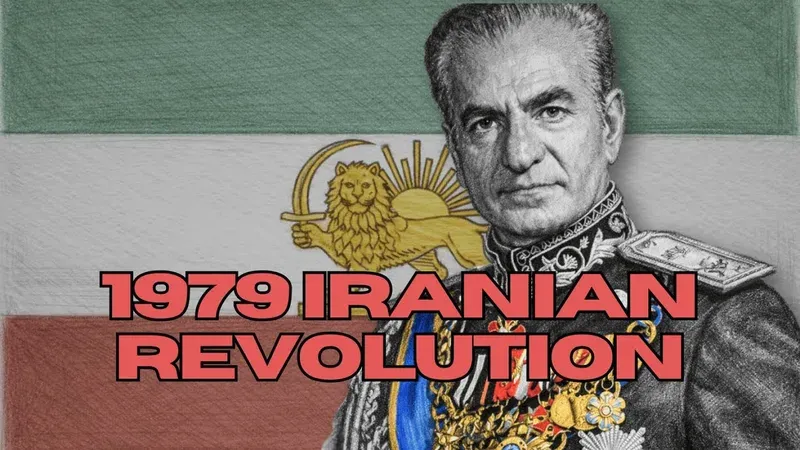
In this episode of Ancient to Recent, we step into the glittering world of 1960s and 70s Tehran, where nightclubs, foreign visitors, and booming oil revenues gave the impression of a nation racing confidently into the modern age. At the center stood Mohammad Reza Pahlavi, the Shah of Iran, a monarch determined to reshape his country through rapid modernization and centralized power.
Beneath the neon lights, however, another Iran was emerging. While oil wealth transformed Tehran and empowered a new elite, millions were left behind in the countryside and swelling urban slums. Political repression, corruption, inequality, and cultural upheaval quietly eroded the regime’s foundations.
This episode traces the Shah’s rise after the 1953 coup against Mohammad Mosaddegh, the consolidation of autocratic rule under Savak, and the ambitious reforms of the White Revolution. We explore how policies designed to modernize and stabilize Iran instead deepened social divisions and fueled opposition from both the secular left and the religious right.
As American influence grows, oil revenues surge, and the Shah’s confidence reaches its peak, a powerful voice of resistance emerges in exile: Ayatollah Ruhollah Khomeini. What appeared to be a strong and stable state was, in reality, far more fragile than it seemed.
Join Joseph Parkinson as Ancient to Recent begins a new series on the Iranian Revolution, uncovering how the Shah’s Iran moved from apparent triumph to the brink of collapse.
🎧 New episodes every Saturday
📲 Follow on YouTube, Spotify & Instagram @AncientToRecent
#IranianRevolution #ShahOfIran #MohammadRezaPahlavi #MiddleEastHistory #WorldHistory #HistoryPodcast #AncientToRecent
Read transcript
This transcript is automatically generated, so it may contain typos and misheard names.
I envisaged future generations of Iranians proudly taking their rightful place amongst the vast family of nations, dispelling forever the medieval shadows for which Iran had emerged only half a century ago. Muhammad Reza Pahlavi, Shah of Iran The bright lights of Tehran's fashionable districts would have made any visitor from Paris, London or New York feel instantly at home. The hum of the disco beat, clink of the cocktail glasses and whirl of the roulette wheel sounds that could be heard in any number of trendy neighborhoods where the affluent, up and coming bright young things of Tehran's outwardly confident, upwardly mobile classes of the 60s and 70s came to relax, socialise and dance the night away. So great was the appeal that Tehran drew visits from Beatles member Paul McCartney in 1968 and pioneer of modern art Andy Warhol in 1976.
Iran was a nation on the make, a nation in a hurry. The 20th century had not been kind to Iran, surrounded by hostile neighbors, preyed upon by European colonial powers and now caught between the vice of East and West, capitalism versus communism, Soviet vision or American dream. But those days seem to be long in the past. The future was bright. Iran, Farsi speaking culturally Persian, embraced the heterodox Shia variant of Islam as opposed to Sunniism practice by 90% of the world's Muslims with large Christian, Jewish, Sawitarian and Bah communities.
A Muslim society but proud of its pre Islamic roots that drew upon a rich current of Persian civilization going back to Cyrus, Darius and Xerxes. A Persian nation with Arabic, Kurdish, Aziri, Lurs, Balak and Turkmen ingredients that made for a heavy brew. A nation with 2500 unbroken years of statehood that looked confidently to the future. Iran, under the leadership of the modernising monarch Muhammad Reza Pahlavi, seemed to be a place that was bucking the trend. A place that was proving everyone wrong. A visitor to the smart shops with the latest brands, tidy cafes, European style restaurants and bustling nightclubs may have come to the conclusion that Iran was a nation at peace with itself.
But look closer, look beyond the dazzling lights and the neon signs, and you will see another Iran. This Iran. Only a few miles away from the clubs where the bright young things partied to The Rolling Stones, was an Iran of the small town, of the sprawling slum, of the impoverished migrants living in squalor in the hastily constructed tenements. This was the Iran of the countryside, where deeply conservative and religious people eked out a living a nation that was seething with resentment. Welcome to Ancient Recent.
My name is Joseph Parkinson, and this week we start a new series on the 1979 Iranian Revolution. We look at the root causes, the currents that pull the Iranian society apart and led to the collapse of the monarchy and the ascent of Ayatollah Khomeini. Episodes of Ancient Recent are out every Saturday and are available on YouTube, Spotify and I hope, podcasts. Mohammed Reza Pahlavi, the Shah of Iran, was the second of his line. You see, the pallavis was something of a new royal dynasty.
His father, Reza Shah, had been an army officer staging A coup that overthrew the previous royal family, the Kajar dynasty, in 1925. Reza had taken Turkey's Mustafa Kamal Ataturk as his inspiration and presided over a period of breakneck modernisation, seeking to smash the power of the clergy and the landlords that he believed held the nation back. Reza Shah however, could do little in the face of global events and during the Second World War, Britain and the Soviet Union would occupy Iran, ostensibly for the purpose of protecting it from Germany invasion.
Reza Shah was forced to abdicate by the Allies in 1941 due to the perception that he leaned towards the Axis and thus posed a threat to Allied oil supplies. Reza was bundled onto a ship bound for South Africa where he would die in exile in 1944. Replacing Reza was his 21 year old son Muhammad Muhammad Reza Pahlavi, born in 1919, was short, slight trim, physically fit with a prominent nose and bushy eyebrows. He shared his deposed father's desire to bring Iran, kicking and screaming if needed, into the 20th century. He initially reigned as a constitutional monarch, his powers limited by the 19 O 6 Constitution. The ambitious Shah would have to play second fiddle behind more powerful prime ministers.
They drafted legislation and directed the ship of state. His role, like so many other constitutional monarchs, was smile for the cameras, hand out the medals and kiss a baby or two. His most powerful minister was Mohammad Mozzadegh, a passionate social reformer and flamboyant speaker who was determined to break foreign influence that had so long dominated Iran. The most painful example of Iranian subjugation was the oil industry, dominated by British companies who extracted Iran's vast oil reserves to great benefit for themselves and little for Iranian state coffers. So great was British stranglehold on Iranian oil that in 1950, of the 1 billion U.S.
dollars worth of oil extracted from Iranian wells, the UK kept 92%. Iran got barely $80 million. Mosaddek was determined that Iranian resources should benefit Tehran's poor and needy, not New York and London stockbrokers. He set a course to nationalize the Anglo Persian Oil Company, today known as BP. The Shah also wanted to break the dominance of British oil companies. But siding with Mosaddek would further empower his minister and could threaten his throne. But open opposition would allow Mozaddek to present the Shah as a Western puppet.
Thus the Shah tried to play both sides. In 1951, the Iranian parliament passed a bill nationalizing the oil industry. The Shah hesitated, but faced with crisis, he signed the bill into law. The Shah was hemmed in. He yearned to wield power, but he could not challenge the popular appeal of Mohammed Mozaddek. Mozdek continued to push the Shah, presenting a bill that would strip the Shah of the last of his power, that of making appointments to the military.
Finally, the Shah pushed back. Mozdek, outraged, submitted his resignation. Protests erupted, some pro Mozdek, some pro Shah, but Mozdek was able to face down the young monarch. The Shah signed the decree and reappointed Mozdek as his Prime Minister. The Shah seemed doomed to a life of a constitutional monarch, a bejeweled ornament with nothing more exciting to look forward to than greeting ambassadors and cutting ribbons.
But Mosaddek made enemies easily. 1 by 1. He alienated his supporters in Parliament, forcing Mosaddek to rely on the Tudor Party, a Marxist Leninist party that surely held the distinction of being the world's only Communist Party to be founded by a Prince. The British had approached the US about sponsoring A coup to remove Mosaddek, but the idea had initially been dismissed. This changed when Eisenhower replaced Harry Truman in the Oval Office.
The wheels of what would be known as Operation Ajax, the Western backed plot to remove Mozdek, restore the Shah and end Iranian democracy was set in motion. But there was just one thing missing, the approval of the Shah himself. As so often, when the moment of crisis arrived, the Shah vacillated, descended into depression and withdrew. It was not until Kermit Roosevelt, grandson of Theodore Roosevelt and U.S. intelligence officer, informed the Shah that the coup was going ahead with or without him, that the Shah came on board and dismissed Mozdek.
Even then the Shah tried to play both sides, fleeing to Baghdad and then on to Rome. In Tehran protests yet again erupted, both pro and anti Shah, but the army. The army stayed loyal and this time Mozdek had few allies. The Shah was now empowered to rule by decree. Power was concentrated in his royal hands. Parliament became a rubber stamp. Independent political parties were banned, elections a mere formality. From now on it would be royal will, not public consent that would decide policy.
The system the Shah presided over was kept in place by the ever watchful and greatly feared Bureau for Intelligence and Security of State, or, as it would be known, Salvaq. Though far from the most ruthless of Middle Eastern security forces, Salvaq were basically pacifists compared to the sadists and psychopaths of the Iraqi and Syrian Mukhabarat. Under Saddam Hussein and Hafiz Assad, they kept a firm grip on Iranian society. Dissent.
Both of the socialist left and the Islamist right would become acquainted with the savak dungeons and the fear of their ever watchful eye. 1971 would be a monumental year for Iran. It had been 2500 years since the foundation of the Archimedean Empire by Cyrus the Great, an occasion the Iranians took as the birth of their civilization and the Shah wanted to celebrate. He had chosen Persepolis, the capital of the Archimedean Empire, as the venue for a grand spectacle. The great and the good of the world would come to pay homage to the glory of Iran.
The Duke of Edinburgh attended alongside Princess Anne. So did Spiro Agnew, the vice president of the USA. Halle Selassie, Emperor of Ethiopia. The Kings and Queens of Denmark, Belgium, Jordan, Governor General of Canada and Australia, Tito from Yugoslavia, Nicholas Ceausescu from Romania and Mobutu from Zaire all came to pay their respects. The party was catered by Maxims of Paris, considered at the time to be the best restaurant in the world. 120 waiters and 40 cooks were flown in to see that every detail was taken care of. 18 tons of food was served, including 30kg of caviar. The menu included crayfish mousse, roast lamb with truffles, quails, eggs stuffed with caviar, roast Peacocks stuffed with foie gras. 2500 bottles of champagne were drunk alongside Dom Perignon Rose 1959 and Moet Chardonnay 1911. In total, some 25,000 bottles of wine were served to the six of the most VIP of VIP guests.
The total cost ran to 50 million U.S. dollars. By 2026 standards, that would be over half a billion dollars. A more ostentatious display of power and wealth would be hard to imagine, but the event had no lack of problems beyond the fact that the coffee machine wasn't large enough to keep up with demand, A disaster averted by one quick thinking member of the waiting staff bringing a supply of Nescafe. The location of the party was miles away from the nearest city or airport, guests had to be housed in extravagantly constructed tents, and the site of the party happened to be infested with venomous snakes. Nevertheless, the event went ahead. The glittering display of pomp and pageantry was meant to mark the beginning of a brave new era. But would it instead be the last flicker of the old flame? And did it not in itself reveal something that was wrong with the Shah's ran great display?
But after the tape was cleared and the band had gone home, was left. The Shah involved himself in all affairs of the state. He micromanaged economic policy, industrial affairs and grandiose infrastructure problems, whilst also directing foreign policy. All Swiles trying to balance the various volcanic personalities within the Pahlavi dynasty and his own packed social schedule, which involves a heavy dose of extramarital activities. He was a notorious philanderer, with his ministers arranging his encounters with women who met his specific needs, blondes being a personal favorite of his. This wounded his wife and strained her relationship with his ministers.
The Shah had married his third wife, Farah Dida, in 1959 after they had been introduced to each other at an Iranian embassy event in Paris. She'd been living in Paris while she was studying architecture. She was 21 at the time and is still alive today at the grand old age of 87. The Shah's first two marriages had not produced a son in heir and so you can imagine the relief when in October 1960, the current Crown Prince Reza Pahlavi was born.
Further children would follow, a daughter Farhan Hanaz in 1963, a son Ali in 1966 and a further daughter Layla in 1970. Much like his father, the Shah was a keen moderniser. In 1963 he launched the White Revolution, a far reaching program of reforms designed to touch every aspect of society. A huge infrastructure project was launched. New roads, railways, dams and airports were to be constructed. Electrification was to be brought to the most remote parts of the nation. Land was to be redistributed to the peasants from the wealthy land owners.
But it was not just physical bridges the Shah was building, it was ideological ones too. The Shah hoped to appeal to the peasantry, breaking the power of the landed aristocracy. The peasants were surely view him as their paternalistic father and saviour and be loyal to him. Another group that the Shah hoped to win over were women. In 1963, women were given the right to vote. Admittedly, it must be said in largely meaningless elections that they would give them the right to vote.
Nonetheless, Iran had two state approved political parties, the Iran Novi Party or New Iran Party and the Madam Party or People's Party. Neither held the government to account and largely acted as window dressing. A common joke in Iran was that the two parties were the Yes and the Yes Sir parties. These reforms, however well intended they may have been, led to a major backlash. Many of the small farms set up by peasants failed.
These peasants then flooded into the ever growing cities. Having lost out, these peasants were now confronted with the displays of wealth by the well heeled classes of Tehran. They seethed with resentment. The backlash against female empowerment was also fierce. The Shia clergy and conservative peasants did not take kindly to an upending of gender roles and rally to block change. Of all those who spoke out, none was more vocal, None was more visceral than Ruhala Mousavi Khomeini. Born in 1900 in the city of Khomein, some 300 miles South of Tehran, Khomeini was horrified by what he saw as the corrupting influence of women's liberation.
Week by week he railed from the minaret of his mosque, each time with ever growing levels of venom. And unlike many clerics who tried to play a delicate game, criticize the policy but don't attack the throne, Khomeini went straight for the jugular. The Shah was a fool, a radical, A godless atheist drunk and the poison of Western corruption. This was a line few dared to cross. Eventually, SAVAK decided to act and on the 5th of June 1963, Khomeini was arrested. Massive protests rocked the country. Panic gripped the ruling elite.
What to do? Let him go. If he continued to attack the Shah, a revolution could break out or hold the line. But that would require force. The Shah yet again seemed paralysed. He had a tendency to withdraw, some might say to abjugate responsibility in moments of crisis. It was up to the Shah's Prime Minister, Azadolah Alam, to rally the security forces to Clare Martial Law and deploy the troops. The protesters would be face down. Troops fired on the crowds. 100 people were killed, but the protests dispersed.
The crisis passed. With the momentum of the protests broken, the Shah expelled Khomeini. Khomeini stayed in Bursa, Turkey, for a year before moving for the next 14 years to Najaf in Iraq. From his exile, his rage would only grow, pouring out invectives towards the Shah in cassette tapes that would be smuggled into Iran and listened to in the dead of night by diehards and true believers. A lamb may have saved the day, but the Prime Minister was growing increasingly worried about the direction of the country.
In the early 70s, on the eve of the great party of Persepolis, the nation was not in a revolutionary moment, but the temperature certainly rising. The ship of state had not dashed against the rocks just yet, but it was listing, drifting, aimless. The Tehran elite, so assured of themselves, were corrupt, petty and short sighted. The Shah may have launched his much vaunted white revolution, but so many of the infrastructure projects turned into white elephants. So many of the reforms, even the ones that did bring tangible benefits, also had unintended consequences. Expectations were set so high and when they inevitably fell, sure people, even though their lives had improved, became angry.
There was the veneer of democracy in Iran, with parties, elections and a parliament. But the reality is that speech was tightly controlled by SAVAK. And with no means of openly discussing problems, with no means of bringing the people into the decision making process, the malaise only grew. The cancer of corruption spread in silence. The Shah was, by all reasonable standards, a fairly well intended man. He was neither St. nor monster, an autocrat who believed in his unique vision, but more like a King Hussein of Jordan, trying as hard as he could to direct the ship, than a crazed maniac like Gaddafi, A sadist like Saddam or cynic like Hafiz Assad, or for that matter, a revolutionary like Gamal Abdel Nasser.
He worked long hours, sometimes as many as 14 a day, and was convinced of the benefits his vision would bring the people. But he existed in a bubble. Autocrats tend to suffer from a similar set of problems. Those at the heart of autocratic systems tend to have risen by undemocratic means and fear being done to them what they have done to others. These systems suffer from an internal crisis of legitimacy. This prevents autocratic systems from making the most out of human capital. When a truly talented individual comes along with the Napoleon like military prowess, the charisma of Caesar, and the martial arts ability of Chuck Norris, instead of the state assigning that individual to a sector where their talents could be put to the best use of the army or special forces, they are sidelined.
Such people are feared by those at the very heart of the system. They become instead the Iranian consulate to Sunderland, or perhaps the Iranian ambassador to Trinidad and Tobago. Anything to keep them away from power. Those who rise within the system do so not on talent but on loyalty. They are appointed to positions of power based on their inability to do their job. Incompetent subordinates who cannot tell their arse from their elbows nor arrange a piss up in a brewery and hold their bejeweled positions fit with lofty titles due to their incompetence have no incentive to change the system.
Such people retain their position based on telling their superiors what he wants to hear rather than what he needs to know. Thus the state rots from the top down, riddled with corruption, incompetence and self-interest. The bureaucracy takes on a life of its own, divorced both from the needs of the people and the desires of the Shah, who becomes captured, trapped within the system. The Shah may labour long hours and wield immense power, but without knowing what the issues of the day are, he could have a limited impact. The Shah's reforms withered on the bureaucratic vine as those that were charged with carrying out policy either lack the incentive or the basic competence to drive through reform.
The grievances are like acorns. Plant them in the soil of discontent, water them with tears, and over time, from the tiniest seeds they can grow into mighty oaks with no means of course, correction. Without the disinfecting light of open discussion, sparks became Bush fires that could only be stamped out by SAVAK. The inability to discuss problems openly meant that the system was often taken by total surprise. In 1970, a decision was made to increase bus fares in Tehran by 300%.
This led to three days of student LED riots, with protesters engaging in bloody clashes with the police. Cars burned, hospitals filled with the injured on both sides. The air was heavy with rubber bullets, stones and the pepper smell of tear gas. Yet again the system was shocked. Advisors and the Shah alike caught like deers in the headlights, riots on the streets of Tehran over bus fares, but the social reforms, the new schools and hospitals. Iran's economy was experiencing a golden decade during the 1960s, with average growth of 11%. GDP doubled between 1962 and 1972. Real wages increased well ahead of inflation. On all the charts and graphs the Shah's advisers displayed, it looked not just good, it looked great. And yeah, with a single spark, the smell of smoke. Increasingly, the Shah lived a life of isolation, inoculated from bad news and the struggles of normal Iranians. He rarely ventured from the royal palace, and when he did travel, it was by helicopter.
Some ministers had tried to warn the Shah, but when he looked at the data, the charts and graphs presented to him, it all looked rosy. Look, the the line is here. Then on the chart, the line goes up. That's good. The line going down is bad, but the line going up is, is good, right? And then the line goes up even more. So things were good, got better, and they're getting better still, what's the problem? He was convinced that all was going well and that the people, they loved him.
Iran had a difficult history of foreign interference. Though never colonized outright, both Russia and Britain had vied for influence in the 19th century. With the Bolshevik Revolution of 1917, the Russian Empire had been replaced by the Soviet Union. During World War 2, Iran had been occupied by the British and Soviet Union and Reza Pahlavi deposed for his supposed pro German sympathies. In the Cold War era. Iran, if it was to survive, would need a powerful patron, and none was more powerful than the United States of America.
The Shah had sought to court the USA briefly, meeting Franklin Delano Roosevelt at the Tehran Conference of 1943. But even though the conference was being held in his capital, the Shah had to almost beg for the briefest of audience. The American officials considered the President's barely 30 minute meeting with the 24 year old monarch so unimportant they didn't even bother to take notes. As for the conference itself, with a post World War order was being decided. Iran, Needless to say, was not invited. The Sharp assisted.
In 1949, he managed to wrangle an invitation from the US from President Harry Truman. Though he impressed U.S. officials with his command of detail, his badgering for weapons and insistence on a bond between the two countries reaped few concrete rewards beyond warm words. The Shah sought to make Iran indispensable to the US. But how? What did Iran have that the US wanted? I know what you're thinking. Oil right? Well, actually wrong.
In the 1950's the US was a massive net exporter of oil. Over 50% of all the oil in the world was from American wells. the US actually had strict quotas limiting the importation of foreign oil. So Iranian oil in the 1950s bought the Shah. Very few American friends. The US was wary of cozying up to Iran whilst the Shah tried to stress the importance of building up military power to counter Soviet aggression. Pentagon plan has pointed out that no amount of US arms to the Iranian military could seriously stop the Red Army. U.S. officials were also concerned about upsetting the delicate balance of power in the Middle East. Favouring one nation would be seen as threatening others, and both Iraq and Saudi Arabia were important American allies. Neither wish to see and embolden Tehran with American weapons. the US had helped the Shah get rid of Mozdek, who would live under house arrest until 1967, where he would die of cancer and be buried, of all places, in his own living room, so keen was the Shah to avoid any public remembrance. But the US had little interest in Iran. The CIA trained SAVAK and two listening posts were built in Iran to spy on the Soviet Union.
Other than that, US relations went little further than regular lectures from US presidents to the Shah about human rights. There was another reason the US was not keen to place too much trust in the Shah. His conduct during the coup against Mossadegh. To the minds of U.S. officials, the Shah had frozen, almost blown it. The Shah had literally fled halfway across the world at the very moment he was needed the most. The Shah was at best indecisive, at worst a coward. the US liked it's strong men, well, strong, who had any need for a weak autocrat. But things began to change from the mid 1960s. the US, once a major net exporter of oil, now saw its share of the global market shrink.
Aggressive drilling had exhausted US wells and demand for oil was skyrocketing across the world. The Shah had made sure that the oil resources, once the sole reserve of the British and coveted by Iranian nationalists by Mossadegh, made their way into American hands. The Shahs reputation further improved after the 1963 Tehran riots, where he was perceived, rightly or wrongly, of showing a firm hand, declaring martial law and bringing the situation under control. With Kennedy's assassination and the highly unsentimental LBJ both in power and hip deep in Vietnam, the lectures about human rights dried up almost as quickly as American oil. By the mid 1960's, the US was fighting a bloody, morally confusing and unwinnable war in Vietnam. The site of American jet fighters. Bombing and napalming one of the poorest countries in the world made American rhetoric about democracy and freedom seemed decidedly hollow, especially in the developing world. Suddenly EU s s stock had never been lower and friends never so hard to come by.
Furthermore, Britain, exhausted by two gruelling world wars in quick succession, was in the process of dismantling it's empire. Britain had a string of bases in the Persian Gulf, most notably in Bahrain. This vacuum was sure to be filled, and the US wanted to make sure it wasn't Russian accents soon to be heard in the bazaars of Yemen and Oman. the US, exhausted and demoralized by bloody adventures in Southeast Asia, was reluctant to step in.
The United States was under a new administration. Richard Milhouse Nixon had been elected in 1969, and he knew the Shah from his time as Vice President Eisenhower. At the time of the 1953 coup, the two had a relationship going back several decades. Nixon had a new vision for US foreign policy. Communism was to be confronted by proxy. No more GIS dying in far off lands. But this new approach would mean working through local partners, and sometimes that meant getting into bed with some decidedly unsavoury characters.
Nixon would provide the Shah with a close relationship and crucially, the weaponry the Shah craved. And Nixon would also make sure that any pesky questions about crybaby dissidents and their so-called human rights were long forgotten. From now on, the Shah would have full US backing and US weapons companies would be open for business with no questions asked. Restrictions on Iranian purchases of American weapons would be lifted. The Shah was free to spend, spend, spend, and he went on one hell of a shopping spree.
So much work did the Iranian credit card do that Iran was the single largest foreign client to the entire US armament industry in the 1970s. US arms sales surged from $524 million in 1972 to 3.9 billion in 1975. Between 1970 and 78, the United States of America would sell over $20 billion worth of military equipment to Iran. From 1954 to 1960, Iranian oil revenues increased sevenfold. By 1967, they had tripled yet again.
This increase may seem impressive on the surface, but in reality it was small beer. Oil companies were still taking home huge windfalls with the state getting what was left in the 1950s and 60s. Oil producing countries were caught in a bind. The oil industry was profitable for everyone except them. Demands for oil post World War 2 surged and yet prices continued to lag. How could this be? Well, demand was surging, but so too was supply. Fresh finds, oceans of oil, were being discovered in Saudi Arabia, Iraq, Algeria, Libya and Venezuela. So no matter how much people consumed, and they were consuming in vast amounts, supplies always outstretched demand and prices always stayed low. These oil producing nations were always at the mercy of oil companies and those companies were not keen to share the spoils.
This all changed in 1969 with the rise to power of an erratic figure, Colonel Muammar Gaddafi. Libya had been one of the poorest countries in the world, but a gigantic oil field had been discovered in 1959. At first the same old cycle. Oil companies paid what they wanted and the hosts grumbled. But after Gaddafi came to power, he took a simple approach. Libya was dirt poor before the oil and is now dirt poor with the oil. So Libya stands to lose nothing by simply turning off the taps. Pay us what we want or go elsewhere. The oil companies promised to stand up to Gaddafi, but Gaddafi didn't back down.
And it was the oil companies that blinked first. This sent a clear message to all oil producing nations that they had leverage after all, and it was the oil companies, not them, whose hands were tied. In 1971, OPEC announced the Tehran Agreement, which set the stage for phased in price increases to make oil production pay for the host nations. These prices, as one can imagine with the conference being in Tehran, have been in part driven by the Shah.
Within a few short years, oil revenue doubled. Money suddenly began to flow into Iranian state coffers. But it was not just the cunning moves to the Shah that led to rising revenues. Outside factors contributed to In 1971, President Nixon cancelled the US oil quotas that prevented foreign oil from flowing into the US. All of a sudden, the gates were open for foreign oil to flow into the thirstiest oil economy in the world.
With no further subsequent increase in production, the oil glut was starting to dry up and prices rose sharply. On the 6th of October 1973, the armies of Egypt and Syria launched a sudden assault on Israel. The attack had been planned to coincide with the Jewish holiday of Yom Kippur, where it is believed that Israel would be distracted. The Arab armies were determined to avenge the humiliation of 1967 and do away with Israel once and for all. Initially, the Syrian and Egyptian thrusts caused the Israelis to panic, driving the IDF back, but the Israeli army rallied and held the line.
Both the US and Soviet Union rushed supplies to their respective allies, but American weapons told on the battlefield and Israel having been taken by near complete surprise, not only drove the Egyptian armies back, they pushed into both countries, crossing the Suez Canal in Egypt and entering the suburbs of the Syrian capital of Damascus. Outraged by western support of Israel, Arab oil producing countries introduced an embargo which caused further chaos and a resulting rise in the price of Iranian oil. The Shah played yet again a double game, publicly calling for calm and moderation on behalf of the oil producing nations, privately happily reaping the windfall. His outward appearance of being a reasonable adult in the room meant that his reputation improved almost as quickly as his bank account.
Iranian oil revenues increased from 1.2 billion in 1970 to 4.4 billion U.S. dollars in 1973, further shot up to $21.4 billion in 1974 alone. In 20 years, Iran's oil revenue had increased over 100 times over. At the same time, as the Iranian economy boomed, so did US Iranian relations. Iran went in short order, from a provincial backwater with minimal embassy staff to a key ally, a prime post with a huge U.S. intelligence, security and diplomatic team. But it's fair to say that U.S.
embassy and intelligence staff knew little about Iran. It's history, culture, aspirations and problems. What's more, many of them could care less. Few spoke Farsi and most of them had short stays. Only two years, so no point in learning, right? Just by the time AUS official might be able to get a feel for the place it was. On to the next assignment. Washington not only did not encourage it's staff to get to know Iran, US staff were positively discouraged from gaining knowledge of Iranian society.
US efforts were focused on the neighboring Soviet Union. Maybe a few thoughts could be given to what remained of the Iranian left, but other than that, few new and fewer cared. This attitude was further encouraged by the Shah, who requested that the CIA not gather intelligence on Iranian politics, a task that should be left to SAVAK. U.S. officials lived separate lives from Iranians. They had separate schools for their children, separate accommodation for their wives, and even the occasional husband.
SAVAK thoroughly vetted any Iranian staff to make sure that all Iranians working at the embassy were true blue Shah loyalists. In the unlikely circumstance that an American official might encounter an actual living, breathing Iranian, and that Iranian might have some command of the English language, they almost certainly would not say anything interest to the Shah or critical of his government. And even if said Iranian might want to, they would know that the all seeing eye of Savak was watching just in case.
Thus, U.S. officials in Tehran and Washington gained an entirely warped view of Iranian society, completely divorced from the grievances of Iranians and the struggles of their lives. As the money flowed in, so too, like flies to honey, came the grifters. Every businessman, chancer and cowboy, every weapons contractor and carpetbagger made their way to Tehran. They saw audiences Polish their elevator pitches and rehearsed the usual sales performance. To transform would be nicest into the very latest must haps their targets.
Government ministers suddenly controlling huge budgets with little experience of money or idea what to do with it. Foreign businessmen were all too eager to grease the wheels of state with an envelope slipped across a table. A sign of gratitude for the minister and a reward for his patriotism. Not a bribe. No, no need to use the B word. No, of course not. Let's call it A financial recognition of 1's diligence. Soon the envelopes became paper bags and then the paper bags became suitcases. Iran had new wealth and the Shah was in a rush to spend it. The cash funded the White Revolution. State expenditure tripled.
Tehran was transformed into a city of cranes as high rise buildings sprouted like flowers reaching for the sunlight. Foreign goods flowed in. Cars, radios, refrigerators, the finest food. The latest bands came to perform and as they flowed in, so the money flowed out. The ruling class now had money, real money. They weren't Tehran rich now. Now they were Sandra Pay rich. They were Monaco, Paris, London rich. They were fountains of champagne.
Coco Chanel, Dior, Don Perignon, Rolls Royce, Rolex, Savile Row, Rich and just like their Shah, they were in a rush to spend every penny of it. But while the winners of the great oil boom partied in their Louis Vuittons, the disco beat seemed to drown out the cries of the losers. The reforms of the White Revolution did not bring universal prosperity to the countryside. Many small farmers failed. Inflation driven by mass spending ate up their savings and drove them into the slums of Tehran. The gap between the rich and the poor grew into a chasm. Some found meaning in the far left, joining the underground radicals and revolutionary groups. The growth of such groups fuelled the ever expanding presence of SAVAK and their ever more brutal methods. The air grew heavy with the stench of repression. Others, especially young men, driven from their homes, the old social bonds broken, seething.
With resentment, they had lost their privileges as men whilst being driven into poverty. For them it was not Marx but the mosque that they turned. By the mid 1970's the Shah was at the peak of his power. All around new skyscrapers, power plants, airports and hydroelectric dams paid testimony to his reforming, modernising zeal. He had taken a backward, unimportant, impoverished nation and made it into a modern, forward facing wealthy country and a key ally of the United States of America.
He had made Iran rich. He had even made Iran cool. 1000 miles to the east, in the city of Najaf, an old man sat in front of a tape recorder. He composed his thoughts before holding the receiver to his mouth and pressed play. This man had a very different view of Iranian society from the Shah and his message was being heard by an ever growing audience. The words he spoke smuggled into Iran by devoted followers and listened in the quiet and the dark. We're about to set the world on fire. Thank you for listening to Ancient to Recent. My name is Joseph Parkinson.
Next we will continue the story of the 1979 Iranian Revolution. We will look at the events immediately leading up to the revolution as society begins to unravel. Episodes of Ancient Recent are out every Saturday and are available on YouTube, Spotify and Apple Podcasts.